
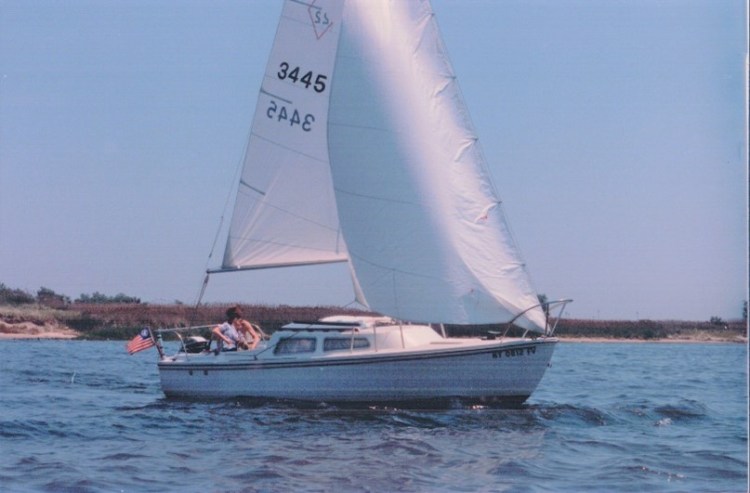
We have been full time liveaboard cruisers for the last 13 years. For the last 42 years we have owned and sailed sailboats. Ever since that cold April day 42 years ago when Maureen first fell overboard docking our 22’ Catalina, the pitfalls of sailing – demasting, boom breakage, engine failures, adverse weather, cuts and bruises, unexpected expenses, and disappointments – have been part and parcel of owning and using a boat in salt water. As our cruising friend Mark once said, “everything on the boat is broken, you just don’t know it yet”.
But I don’t want to harp on the negative aspects of sailing because they don’t outweigh the positive aspects. Some may debate that, but that is how we feel. But what I do want to reflect and comment on is the social sailing structure that has revealed itself over the years and what may keep cruisers on the sea. Anyone who has ever stepped aboard a boat can sense the difference between land and water. Beyond the obvious – some people actually get sick the moment they step aboard a boat not aground – the whole experience for many is life-changing.

Sailing, of course, has a long and storied history. Traditions, exploits, adventures and myths have always been part of the lure of the sea. However, the history of recreational pleasure cruising has not been as long. Maybe Cleopatra cruised the Nile for pleasure but I’m not sure of that. Long distance sailing was spawned by the commercial merchant trade. Little, if any, note was given to those who crossed oceans for fun. Mutinies were more noteworthy than celebratory recreational events. Sea shanties seemed to emphasis the hardships rather than the joys of seafaring.

But things started changing in the 1800’s. Dismal life ashore may have driven some to seek better lifestyles or adventures on the sea. Many books have been written reflecting how innocent landlubbers were drawn to the sea and to a different way of life. I’m thinking of “Two Years Before the Mast” (s/v PILGRAM) by Richard Dana or “Typee” by Herman Melville (s/v DOLLY). The former is about life aboard an early maritime merchant trader and the latter aboard a whaler. Both, based on the author’s personal participation, gave accounts of being drawn to life sailing the oceans of the world (and the harsh reality that ensued). Of course, pirates held the public’s attention and naval warfare heroes were popular but those are different stories. Throw in competition races like the America’s Cup and the world of recreational sailing the ocean became a draw for many.

Joshua Slocum (s/v SPRAY) certainly can be credited with demonstrating that a cruising liveaboard lifestyle need not be a commercial enterprise. I’m sure there were other pioneers down through the years all the way to Lynn and Larry Pardey (s/v SERAFFYN), Don Street (s/v IOLAIRE) and many others. Today, video blogs proliferate (s/v LA VAGABON, DELOS…) that continue to promote a lifestyle that Joshua and others could only dream about. I’m thinking of Melville sailing on a catamaran off Spain, writing the next great sailing story and being attacked by Orcas while video blogging to his grandkids. Of course, gone are the days of hardtack, salted fish, octants, signal flags, and baggywrinkle. All replaced by onboard baked artisanal pizza, refrigerated fresh salmon, GPS, Starlink and dyneema.
But what of the sailors and their lifestyle? Before the advent of recreational sailing and excluding explorers, there was a hierarchy of sailors (and pirates). At the top of the list were sailors the likes of which Mark Twain wrote about aboard the s/v BAY OF BENGAL. The sailors of these fast and mighty clipper ships sailed halfway around the world and were at the pinnacle of admiration. Lower down the list one would find the smaller packets, the costal schooners, the Gloucester fisherman off the Grand Banks, the local scows and barges. According to Dana, the least desirable vessel to sail on was a whaler. It attracted only those who couldn’t, for various reasons, gain employment elsewhere and were not in jail.
With all the above in mind, where do today’s recreational cruisers fit in? Where do we (s/v KALUNAMOO) fit in? Putting aside the commercial maritime industry (Merchant Marine), racing and mega yacht boating, the social circle of cruisers is stratified. This is the arena we have lived in for 13 years and some of its inhabitants that we have come to know. Let me first say that the community is 95% sail boats. Not that we have anything against powerboats, but the fact of the matter is, offshore cruising does not lend itself easily to small (less than 80’) powerboats.
Within this community, there is a diversity of personal backgrounds but we noticed a preponderance of people who are less risk adverse than the people we know ashore. These can be entrepreneurs, ex-military, self-employed, or others with a definitely “independent” outlook on life. This is not surprising but does color the community in different ways. The experiences they had while cruising are as endless as their stores.
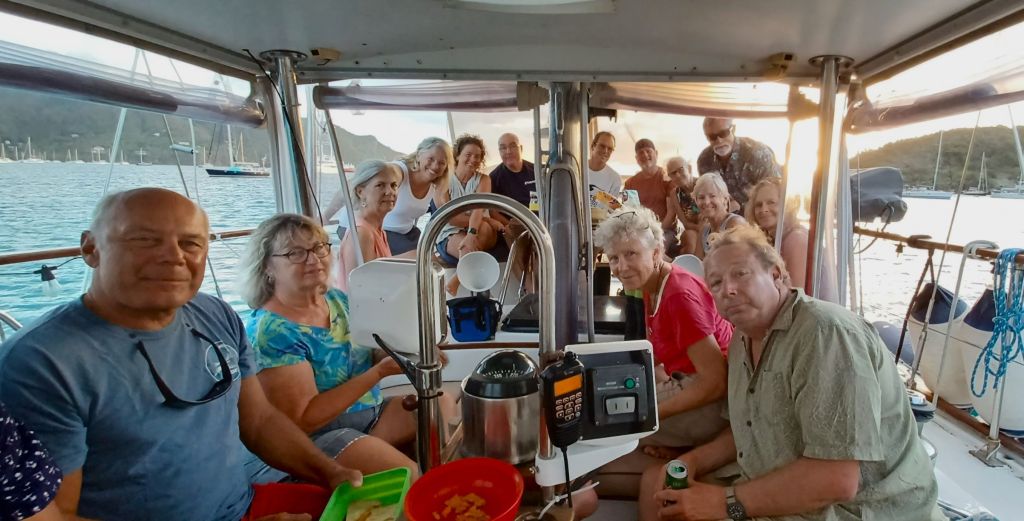
Beyond that, there is also, what might be called a “commitment level plan” to the sailing lifestyle. There is no “right, proper or derogatory” plan and the levels range widely. The majority that we have encountered are either full-time cruising liveaboards with no land base or part time cruisers with a land base or home. And they tend to be very social minded – i.e. frequent sundowners, offers to help, and generally very friendly. Their “long term” commitment plan may be as short as a year or two or as long as 10 years or more. In other words, it is not a “forever” plan. This leads to cruisers we have met that drift in and out of our lives but remain friends regardless of where we or they are.
A minority of others are split into those who have no intention of living ashore at any time (own no shoes) or those who plan to move on to other adventures after a relatively short time aboard (did that, done that). They too share the social aspect of cruising. Of these, at present, we fit into the no shoes plan. Of course, health, wealth and age (HWA) play an important part with all of these plans.
The cruising (migration?) range for all cruisers vary from a few hundred miles to multiple earth circumnavigated voyages, proving the earth is round…and big…with many, many places to see.
An underlying theme in all of this, from Cleopatra (maybe) to those who jump aboard their first boat – a 55’ cat? – is the Sense of Freedom! The Song and Lure of the Sea. But I wonder about that which brings me to the title of this blog, Slave of the Sea (sorry it took so long!).
Was the song we heard actually mermaids luring us to shoals of despair. I’m here to warn you as many succumbed to its seductive power of promised bliss. Are cruising sailors really that footloose and fancy free or are we slaves of the sea?

Have we fallen victim to the Stockholm Syndrome of sailing? Tales of heroic re-fits and battles of epic seas earn medals of honor while endless hours at the helm garner admiration for fortitude and perseverance. The truth is that a sailor’s sense of freedom is a figment of our imagination while a hidden master dictates the course that we will follow, the repairs that we make and the bilges we pump. We are captivated by the sea’s demands and ultimately identify closely with our captor. We enjoy this role of slavery and its ceaseless challenges. We relish the zig zagging life of voyages that were and those to be. Make no mistake, we are Slaves of the Sea wedded to the capricious whims of wind and wave but rejoice and enjoy the rapture of its daily embrace. We may be Slaves of the Sea but have avoided being ground into the dryness of the land.
 Kalunamoo
Exceptionally well written and factual, Bill.
LikeLike