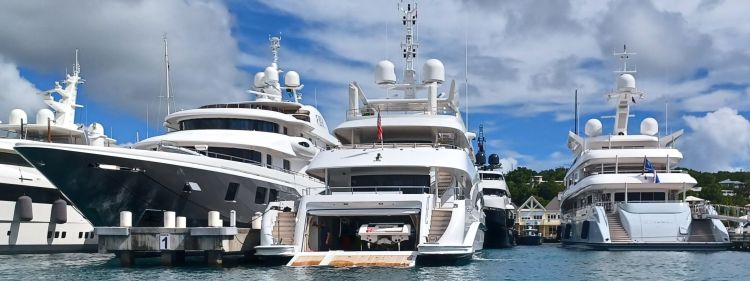
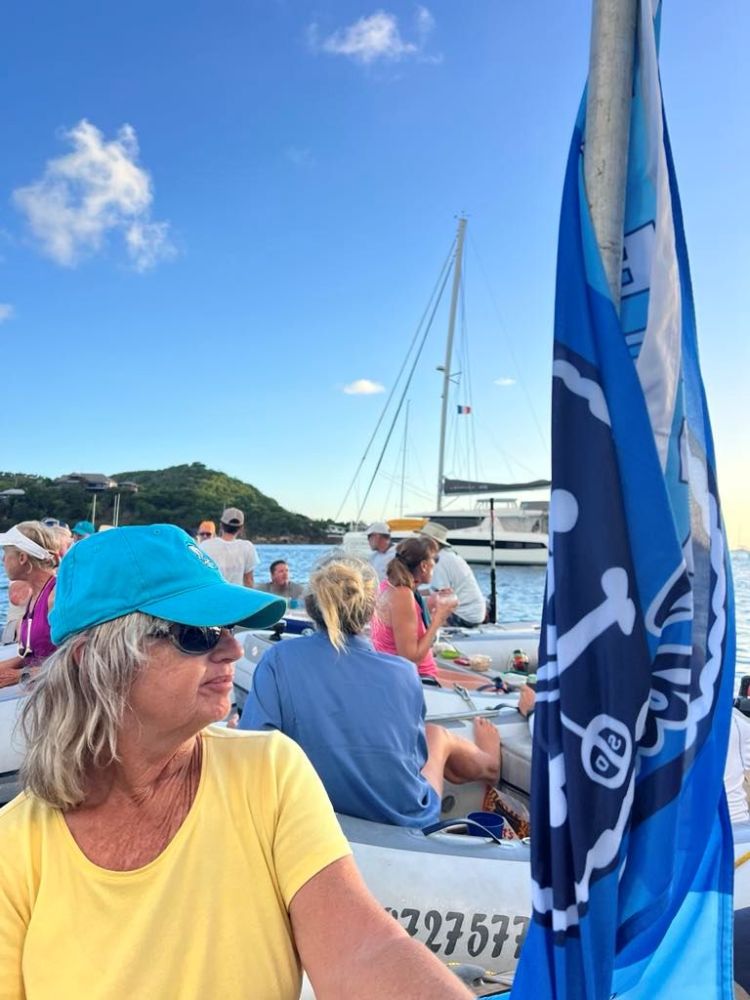
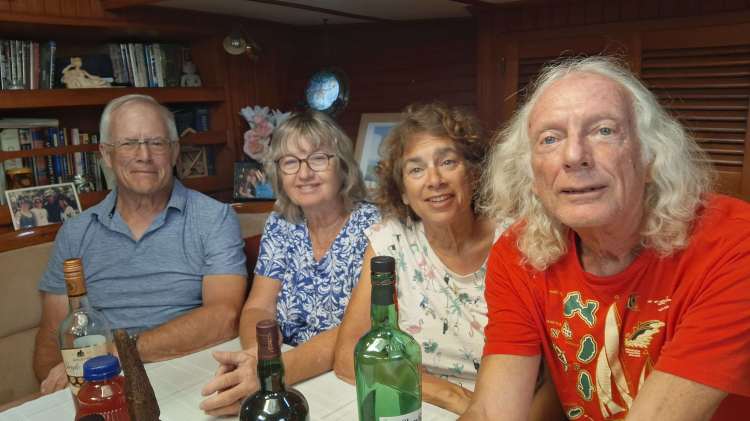
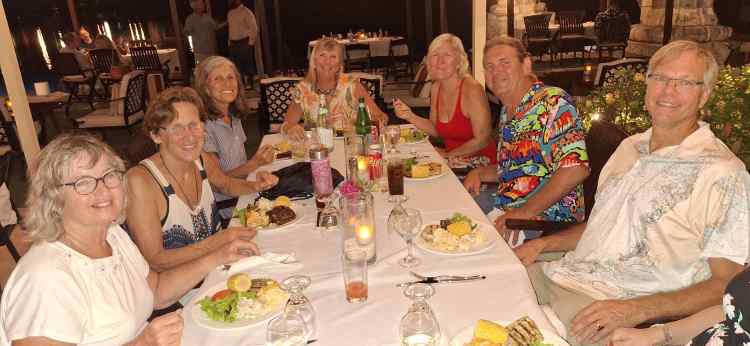
The weeks-long social events that we participated in, organized by the Salty Dawgs, came to an end after Thanksgiving. Dinners, games, gatherings and fun were all good. Cruising is definitely a social occupation. It was great to catch up with old friends and meet new ones, but it is also good to take a pause and not be so socially organized! With that in mind, we moved from Falmouth Harbor to Deep Bay to do so. Before we left Falmouth, the Charter Boat Show began. This is the place to be if you wish to charter one of these mega yachts for a week or so. Now that would be a social event! I can just imagine a bunch of these mega yachts getting together and having a dinghy drift with their tenders like we had! All this may set you back an inheritance or two but it would definitely impress your friends when posting photos on Facebook.
The Salty Dawg Raft-Up
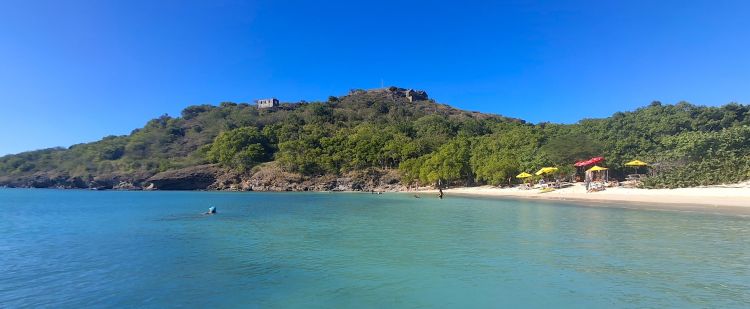
We haven’t been to Deep Bay for a few years. This little bay, on the west coast of Antigua, featured a good beach, protected anchorage, a sunken ship to snorkel and nothing ashore. But developments progress and the resort
ashore, The Royalton, that started to expand when last we were here, has become very popular. Actually, when we were here, jet ski mosquitoes were also a bother. Well, the good features still exist, despite the expanded resort, and the mosquitoes are fewer.
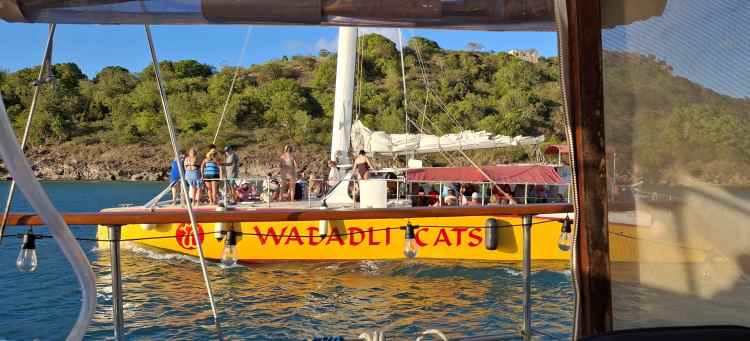
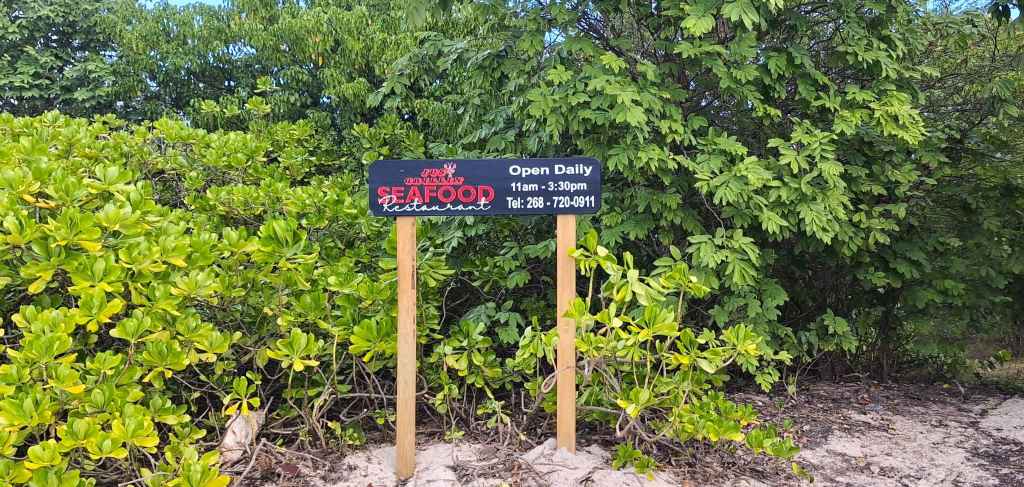
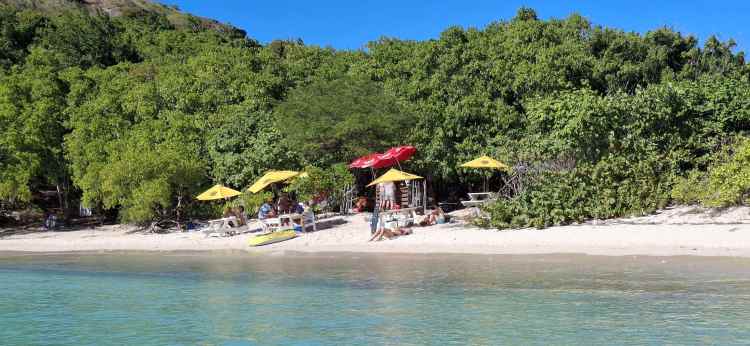
The daily Wadali “cattelmarans” of tourists still arrive for a few hours a day and there is a new very informal beach side restaurant, “Jus Grillin’ Seafood”. Otherwise, it still is a great little bay to chill out and not be socially organized.
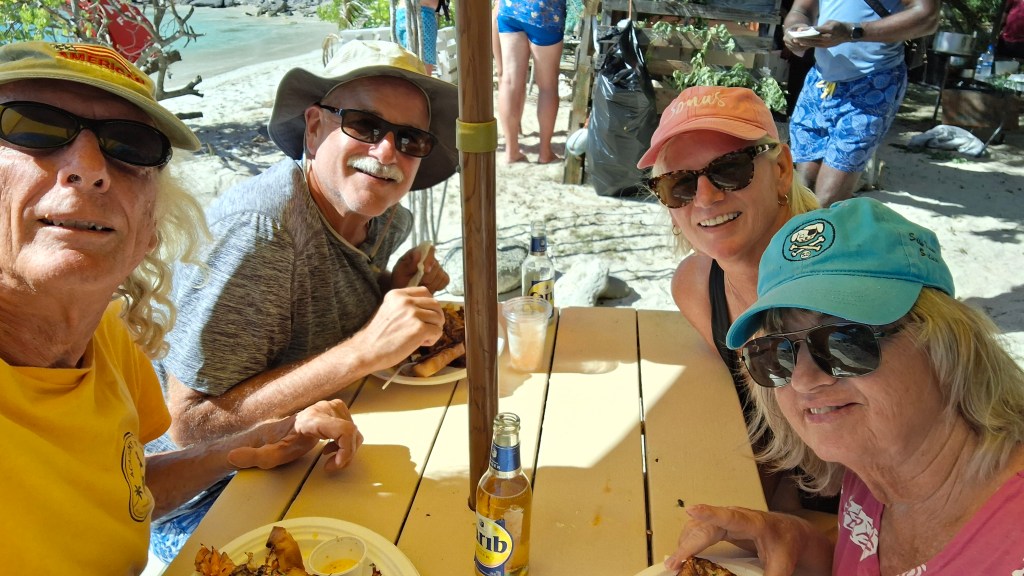
We did, however, meet one other Salty Dawg boat here (of the 2-3 other cruiser boats here) and had sundowners and lunch (lobster) at Jus Grillin. Diane and Carl (s/v SONAS). This is also the beach we can do a brie – a South African beach BBQ – but don’t think we will do it this time around.
So, in a day or so, we will be moving over to Jolly Harbor and then flying to New York next week to start the Christmas Holidays Social Schedule! We are looking forward to being with family and friends but hope the weather cooperates. Coming from air temperatures in the mid 80’s, with the water temps also in the mid 80s, it is going to be a bit of a shock walking around with temps in the 30’s. That is not something we look forward to. A White Christmas looks great in photos but the Deep Bay colors are more to our style. And yes, there are Christmas trees around, despite the lack of snow.
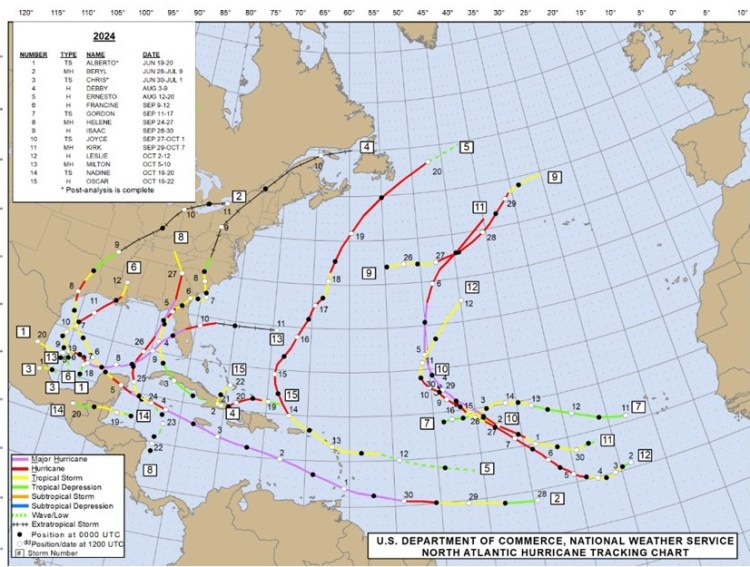
We sailed from Trinidad on November 2. At one time that was considered the end of the hurricane season. It was assumed, therefore, safe to venture after that date into the wilds of the Caribbean where ,hurricanes swirl, whirl and prevail. That was a major concern because most boat insurance policies excluded coverage while in the “hurricane season in the Caribbean”. Since then, the good folks at the marine insurance business extended that date until the end of November. Lately those folks gave up the date and location issue entirely. Many boat insurance policies, including ours, excludes coverage for any “named storm, any location, any time” unless you pay more. Seems, some really believe in climate change when money is involved.
For the record, there were two named storms in the Lesser Antilles this year which is the average number for the last 30 years. Of course, Major Hurricane Beryl destroyed Carriacou but they are slowly recovering.
We sailed north from Trinidad in wonderful weather, picking our way between islands to avoid the squalls and adverse winds. We overnighted in Bequia and then sailed on to St. Lucia. There we spent five days visiting friends and cruisers. The strange thing, while in St. Lucia was that Customs and immigration was closed for almost a week. The problem with that is if you don’t get Customs clearance in and out of an island, you don’t have the right paperwork to enter your next port of call. Fortunately, our next port of call was Martinique. This French Island is not as demanding regarding the paperwork and so we cleared in and out and then had the proper papers to enter Antigua, our final destination.
In the interim, we overnighted in Dominica and Guadeloupe before Antigua. This island hopping for 536 miles brought us to Antigua just in time to gather with the arriving 80 boats of the Salty Dawg Rally from the U.S. Since then, there has been the daily social events they organized that keeps us busy. Lynn and Mark have stayed with us for a five days as their boat ROXY is in Annapolis on the block to be sold. Lynn is the social director for the Dawgs and did a great job, along with Bob (PANDORA), in setting up all the events. Things wind down after Thanksgiving as we plan to spend two weeks in New York for Christmas Holidays.
We have managed multiple dinners, played Mexican Train Dominoes and even had a private Jam on Kalunamoo with young Victor from Spice of Life.
This short video shows, we do actually sail at times. True most time is spent at anchor but as Christopher Cross sang:
Well, it’s not far down to paradise
At least it’s not for me
And if the wind is right you can sail away
And find tranquility
Oh, the canvas can do miracles
Just you wait and see
Believe me
Sailing 2024
Our current “neighborhood” is about 500 miles long and so when the wind is right we move. And when it is not, we stay. Believe me!
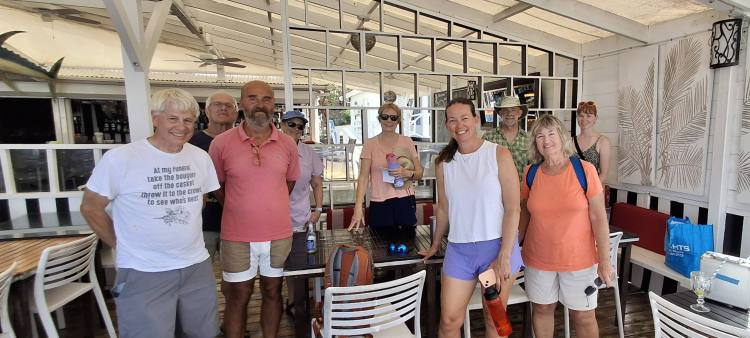
Before launching from Power Boats Boat Yard and moving to Crews Inn for a “vacation” we took a tour with Jesse James and four other cruising couples to the Pitch Lake in southern Trinidad. There are only two other places like this: one in Venezuela and the other in Los Angeles. The one here is the only one mined commercially for pitch and asphalt. It may not seem like a great tourist spot but it is an interesting place and worth the trip. And yes, we did walk in and on the lake and you could actual swim in it but we didn’t. No, it didn’t smell like tar nor did you get stuck in it if you watched your step. For some reason I kept thinking of Br’er Rabbit. However, standing in one place for a short while left an impression of your foot in the asphalt ground. Jesse also took us to the Hindu Temple on the Sea and a Hindu school and events center. Were we in Trinidad or India? As always, Jesse’s tours and commentary while exploring Trinidad are well worth it.
Walking in the Pitch Lake
Temple in the Sea
Hindu School and Events Center
Friday, October 18 was Splash Day. It is always those last minute tasks that need completing before the boat hits the water for the new voyage that creeps up on you. “Hit” is the operative word which you will read about below.
Kalunamoo had been on the hard since May 1, a long time; 4 ½ months to be exact. It has to be remembered that boat parts continually deteriorate regardless of their being actively used on the water or laying dormant in a boat yard. I think, it is a fallacy, to believe that a boat in storage will emerge in the same condition it was when it was laid up. It seems more things break when not used “in storage” than when actually being used. Therefore, it is with a certain amount of trepidation on the day of relaunching in seeing which boat part falls apart, doesn’t work, or falls overboard.
With the shrink wrap removed from the boat, we were able to lower the dinghy and get the dinghy chaps back from Sean at Superb Canvas. They needed some repair and a bag for the security chain. Also, with the shrink wrap off, it was time to see if the new hatch gaskets were water tight. They were. But other drips were found including a major leak by the power cord plugs. Not all were fixed but they don’t call these boats “Leak Teaky” for nothing. As I always say, all bleeding stops, eventually. So to, all leaks stop when the rain stops.
A week before launching, the bow thruster zinc was being replaced. Not a big deal until one of the two tiny metric flat head Allen screws dropped 4 feet onto the gravel and disappeared. Two days of searching for the 6mm long screw was to no avail. It may have gone to the center of the earth for all I knew. Just because the boat is on land does not mean when things go overboard they can be found. There must be a law that states “All things passing over the toe rail shall hence force be ceded to King Neptune for Eternity”.
Fortunately, there is a well-stocked marine hardware shop close by that had the little buggers. With quick dispatch I bought a few, King Neptune may never get them all. Upon tightening the missing screw the zinc split in half. I could almost hear King Neptune’s roaring laugh as I pondered the reality of the situation. The situation is that the Vetus zinc, made in Europe, is not an off the shelf item here. No zinc, no bow thruster. No bow thruster, more difficult to dock. Long story, short (too late?). Our cruising friend, Kevin, just happened to be in Florida and would return the night before the boat launch and could bring two down for me. First thing in the morning I mounted the zinc (after modifications) and we were good to go.
We do get the engine running a day or two before launch. This avoids the embarrassment of the dock workers standing around as you and the boat are in the slings afloat, in the well, ready to depart but either engine or batteries are dead. This never happened to us. A gushing packing gland is a story for another time.
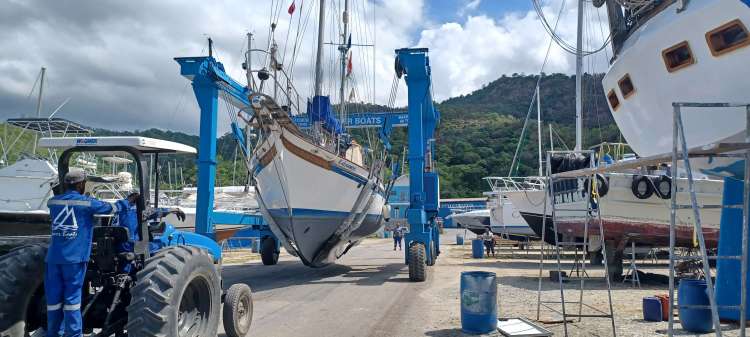
The last touch up of the bottom paint, where the keel was blocked off was brushed on as the marina crew lifted the boat in the travel lift. It was then off to the well and into the water. All was good, the engine started, no gushing water by the shaft seal, we were safely afloat again. As we powered out of the well, we waved and thanked the dock crew and did a short run out into the bay and then returned and headed for the fuel dock. I wanted to top off the diesel tanks, get gas for the dinghy.
The new fuel dock at Power Boats was rebuilt recently. It is a very sturdy, cement deck, steel framed affair. Unfortunately, it does not (as of now) have much of a fender system. Especially at the corners. And that is where Kalunamoo met the dock. As the saying goes, “It doesn’t matter if the water pitcher fell to the floor or the floor hit the pitcher, it is never ends well for the water pitcher”.
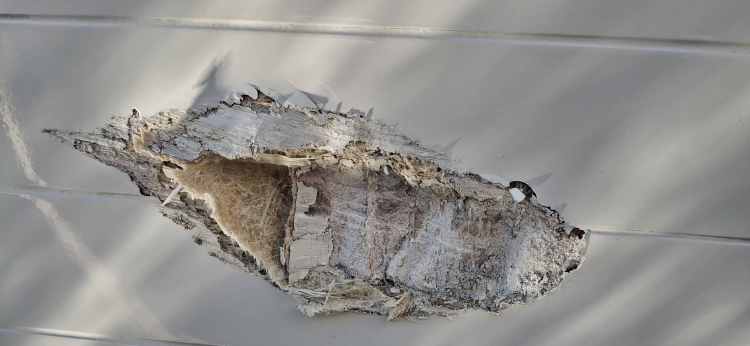
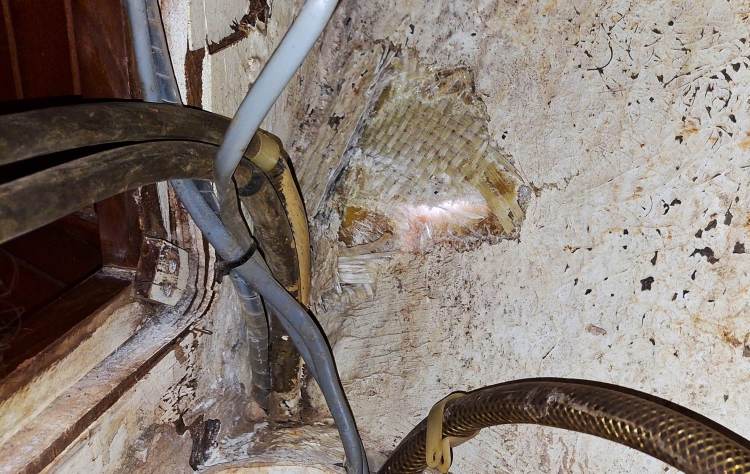
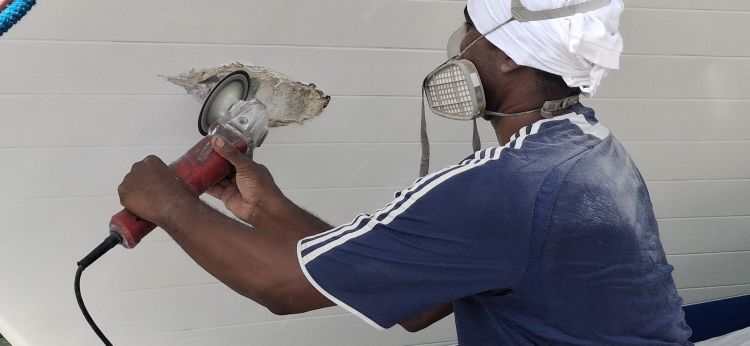
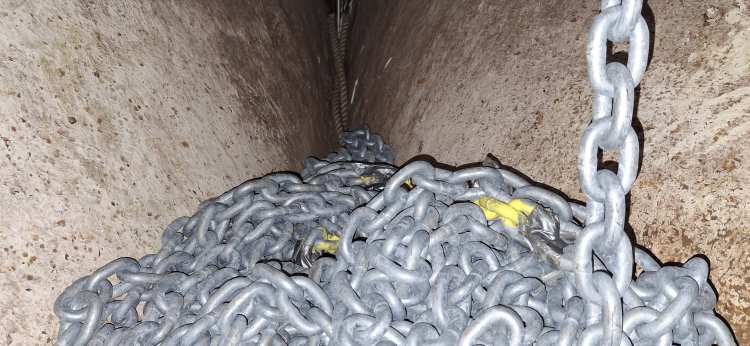
A cross current, a light wind, and perhaps a misjudgment, but in any case, the concrete corner of the fuel dock penetrated the hull two feet above the water line. The boat is heavily built but it is also very heavy. We could have returned to Power Boats and be hauled for repairs or continue to Crews Inn for our “vacation”. After discussing with Ali, the contractor who does most of our hull repairs, we brought the boat To Crews Inn. Ali was willing to repair the hull in the water. First thing Monday, Ali came down to the boat and Quincy came aboard and went to work grinding the inside of the hull. After that, he glassed the inside and ground the outside. It actually was not a big hole, only about 8×10 inches of damage. The hole was inside the chain locker so no inside woodwork was touched. More glass and filler on the outside. Then fairing and finally priming and painting.
Original Outside Damage
Original Inside Damage
Final Inside Repair
Final Outside Reair
In two days, the job was complete. We agreed before starting to use the “off white” deck paint we had on board. It is slightly different than the hull color of “fleet white” but it will do for now. Next year in Trinidad a better match with blending and buffing will be done along with the other dings and scratches that we will accumulate. Even so, the final job looks good.
For the next week or so, we will get Kalunamoo back in cruising shape, provision and watch for a weather window to head up island. We should make Antigua by the second week of November barring any tropical storm developments. That season is winding down but November or December storms are not unheard of. Until then, we are on vacation.
Kalunamoo is almost ready to splash in Trinidad for another season. We came back on board in mid-September shortly after our Mississippi River cruise. The weather was turning cooler in New York, but the hot and humid tropical weather in Trinidad lived up to its reputation. We have started our acclimation to the climate here (with the help of onboard a/c!), and so it feels like the start of another summer again.
New Chain!
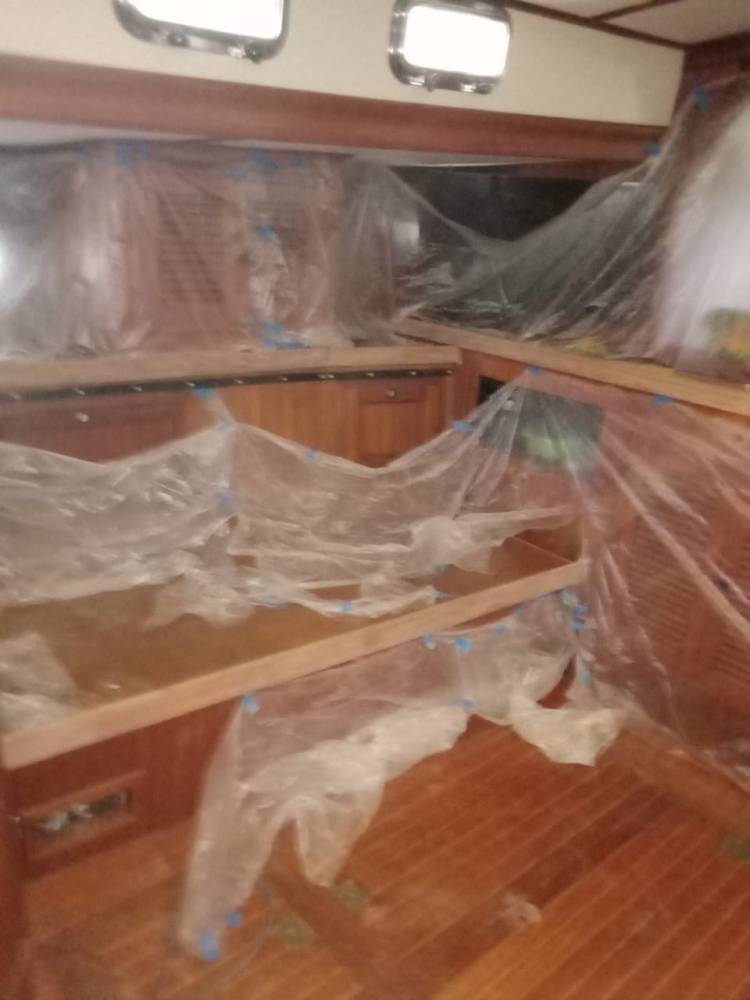
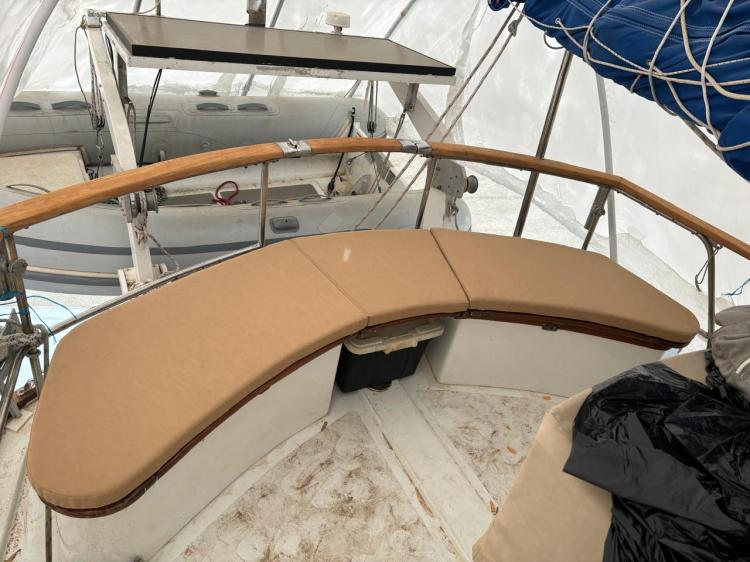
Interior varnishing, a new anchor chain, new hatch gaskets, new on-deck cushions, and other minor items will be completed before we splash and spend two weeks “vacationing” at Crews Inn. By early November we should be heading north to Antigua. That is where we will fly back to New York for about 2 weeks for Christmas. But that is a ways off, so for now we will be back to our liveaboard cruising lifestyle.
Hatch Work
The boat yards here are very busy this year, especially after Hurricane Beryl chased many boats down to Trinidad to escape the storm. That was a good choice as Beryl caused major damage in Carriacou and the Grenadines. The other thing we noticed is that each year the cruising community looks a little different. After eleven years, many cruisers we met earlier have either sailed away, lost their boat, sold their boat, gave up sailing or died. Of course, they have been replaced with many new cruisers but many with a different vibe than those they replaced.
This brought back memories of my days in Maritime College in the late 1960’s. This SUNY college trained future Merchant Marine Officers of which I was one. In my first year (as a mug) there was an old Norwegian sailor, I’m sure he had his masters license, as one of our nautical instructors. Capt’n Olson was his name, but everyone knew him as “Petey”. He was short and stout, but not to be tangled with. From what I understood he received his training on sailing ships.
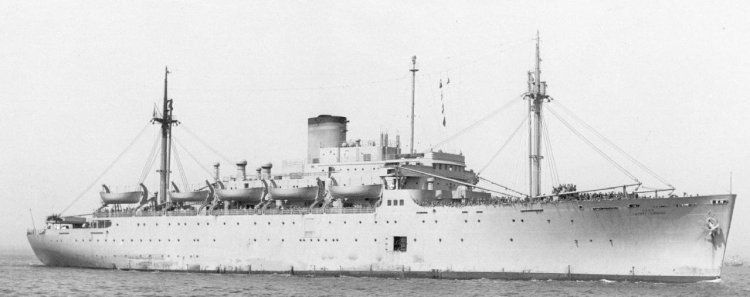
He taught us the fine art of seamanship, starting with the salty language that should not be used in mixed company to the fine art of chipping paint on a steel hull. We climbed the metal masts of our training ship (an old WWII troop transport) slopping on white zinc coatings, red lead paint and washing our hands in diesel oil. Hanging over the sides in bosuns chairs or stages, splicing thick hawsers and wire rope, sewing canvas and bolt ropes, making baggywrinkle… all the things a future Merchant Marine Officer will never do. It was an arcane experience more to instill tradition and saltiness than anything else. But it had its affect. In four years, we would be on the bridge directing much older and perhaps more experienced crew members in the routines and maintenance of large ocean-going cargo ships. It was needed for the salty gravitas that the ocean demands.
The Don Streets, the Pardey’s and other cruisers from past generations demonstrated the way to experience recreational cruising in the same way as Petey did for cargo ships. But times move on, while technology lays its heavy hand on everyone. Bradley Cooper sang “maybe it’s time to let the old ways die”. In other words, the vibe of the old sailing salts have faded into the foiling aerodynamics of air-conditioned multihulls linked permanently to the AI of the future. If Jimmy Buffet was 200 years too late to be a pirate, maybe I was born too early for the modern species of cruisers.
And that explains why we chose a William Garden designed cruising boat. The 1970’s were the heyday of those “leaky teaky” full keel, heavy, bowsprited Formosa’s, Vagabonds, CT’s that evoke a bygone era (or was it error?). I fell in love with them when I was working for a steamship line that carried them from Taiwan and unloaded them in Hoboken NJ. Maybe it was before that. Remember the old TV show, “Adventures in Paradise”? That starred (for me), a John Alden designed schooner in the South Pacific. The boat was, an 82’ wooden boat but was one of five that the film company used, including a 102’ steel hulled “Tiki III” for filming. No matter. Who wouldn’t want to live on a boat like that? At the time, most of my friends.
In any case, years later Kalunamoo, that William Garden design ketch, became our home. It is as outdated as baggywrinkle and red lead paint. Fatty Goodlander once described these type of boats as being intentionally made as heavy as a steam roller and that they sailed almost as well. I’m insulted! I know we sail faster than a steam roller, but sometimes I wonder about those sea turtles gaining on us.
But the point, of all this, is the vibe of the cruisers, we have been meeting lately. Each year they seem younger, more energetic, (just wait till you get old!) and have watercraft that sort of looks like a boat. Many are actually still “working”. Having direct internet access anywhere, including in the middle of the ocean, “work from home” becomes a very broad description of what they are doing. Mostly, however, their future plans don’t include maintaining this lifestyle for more than a few years, or until they can sell their craft at cost. Yes, the vibe is different, can’t say for better or worse. I hope these cruisers, many off to round the world voyages, have the gravitas demanded by the ocean. That is one thing that does not change. I wish them safe voyages.
As my old instructor Petey would say, “Those &#!#*! swabs couldn’t &#!#*!% tie their &#!#*!% boots right even if &#!#*!% &#!#*!% himself came down from &#!#*!% heaven to &#!#*!% help them. Well, who really knows? Maybe the Ocean.
In 1883, Samuel Clemens (AKA Mark Twain), wrote Life on the Mississippi. It recounted his re-visiting the Mississippi River about 20 years after he left Hannibal and his short career as a steamboat pilot on the river (1856-1861). He sailed as a passenger from New Orleans to St. Paul and commented on the changes that he saw on the river, the towns and the population along its banks. I have no intention, nor ability, to duplicate such an endeavor. I have only been to New Orleans once, in 1971, when the ship I was working on pulled into the shipyard to get a new propeller. But last week, Maureen and I, along with my sister and brother, took a river cruise from New Orleans to Memphis and these are some of my comments on the Mighty Muddy Meandering Mauling Mellowing Masterful Mississippi River.
This river drains 40% of the United States – between the Appalachian Mountains and the Rockies. It takes about 90 days for water from the source, Lake Itasca, MN, to reach the Gulf of Mexico, 2340 miles away. We only travelled the lower river which was impressive enough.
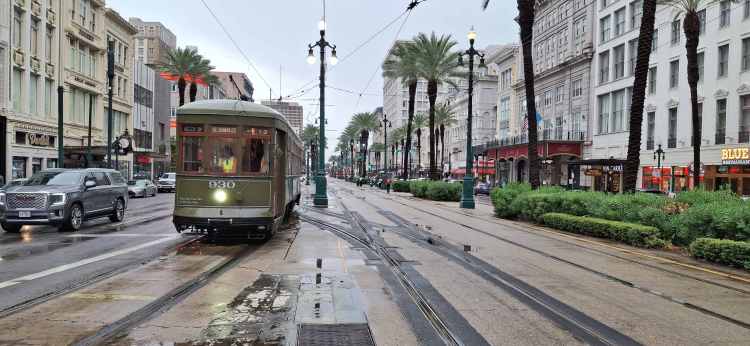
Canal Street, New Orleans
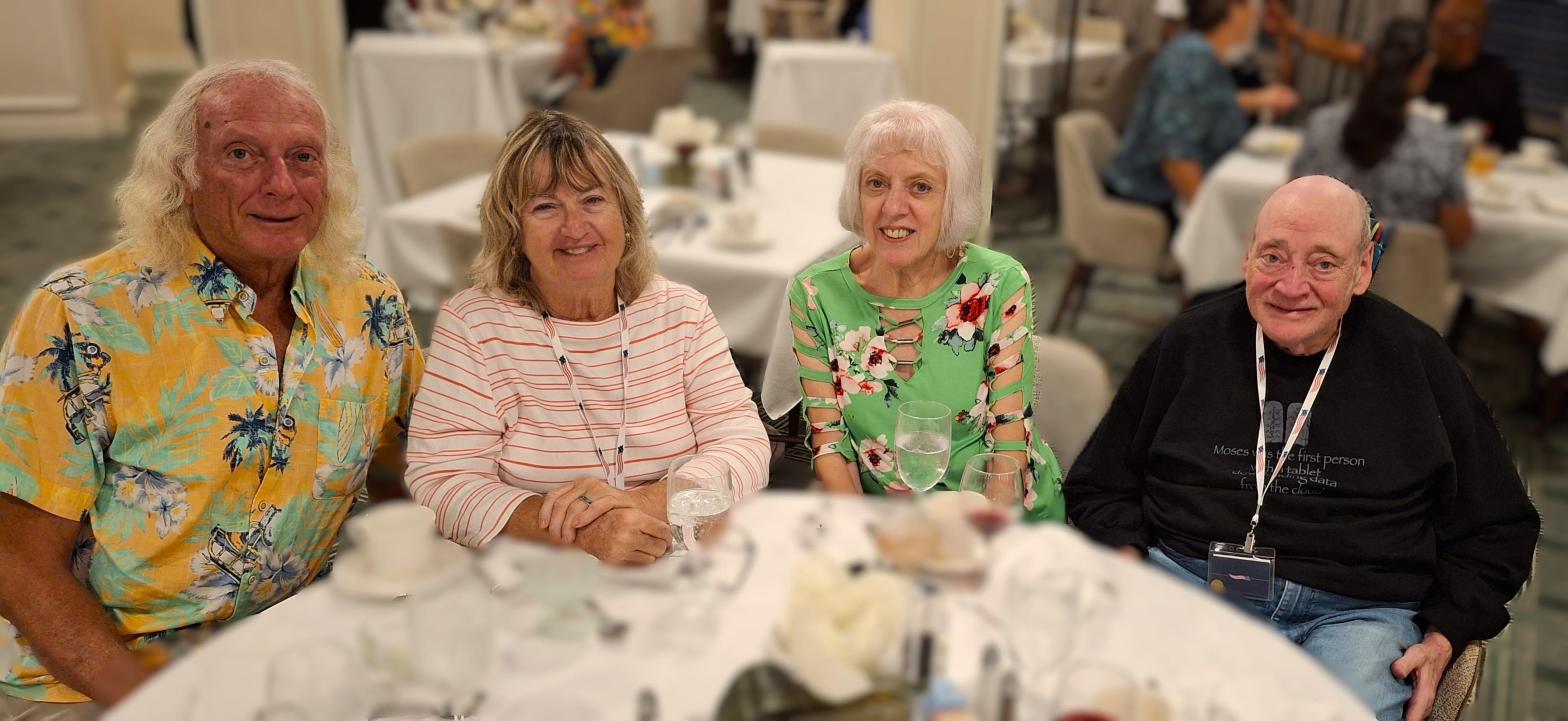
Our stay in New Orleans was short. One day to walk along Canal, Bourbon and Frenchmen Streets (we had dinner with ex-cruisers Roy and Dale, s/v Wahoo, at an Italian Creole restaurant), music at the Spotted Cat and a bus tour of the Garden District, the 9th ward, Jackson Sq. and seeing the effects of hurricane Katrina. This gave us a very short overview of the city. Much too short for any extensive immersion into this classic city. But a sampling of food, music and vibes was gleaned before boarding the American Cruise line’s, American Melody, for a cruise up the river.
Roy, Maureen, Ron, Dale, Bill & Louise
Departing New Orleans, going up river
We set sail on the 180 passenger, diesel powered, 7 foot draft boat and escaped the passing rain showers hugging the Louisiana coast. The heat and humidity which we are accustomed to in the Caribbean was successfully quelled by the air conditioning in all indoor spaces. Truly the south is as pleasant as a New England spring, as long as you don’t venture outside. This is most disturbing to those who would be inclined to keep windows open at night, although the flying night visitors would probably consume most of your fleshy parts by morning.
Our fellow travelers, on the Melody, were as friendly as we have always met on our own liveaboard ventures. Twain remarked that on his cruise he could always tell a New Yorker by what they wore. Maybe so, but today accents can be distinguished (between Brooklyn and Topeka). The marketing target for these cruises seems to be retired people who forgo water slides, late night discos, and adult beverage binge drinking. The riverboat gambler, the newlyweds, and the TikTok generation are not banned but would not be comforted by the cane carrying, early to bed, hard of hearing clientele. I believe these travelers are more interested in museums than mud-baths and motor coach tours over hiking treks and thong bathing suits.
Christen Hall
On board was Christen Hall, whose great uncle was Mark Twain. She gave daily lectures and presentations on the history of the Mississippi River, its people, culture, steamboat and industry activity. Women of the River and Exploding Steamboats were also presented. Very informative. These talks preceded the cocktail hour, both were well attended.
Vacherie
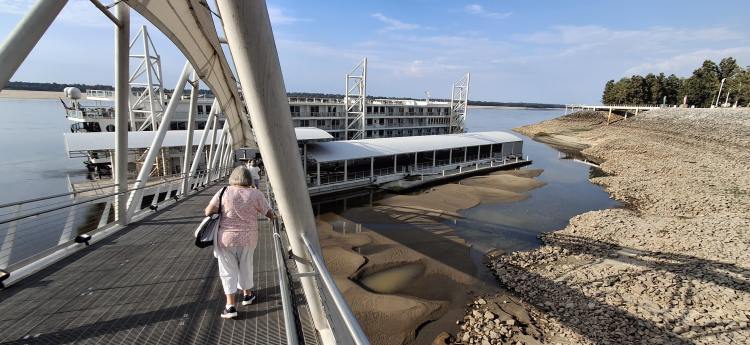
On our first stop, we pulled up to Vacherie, LA alongside a floating dock. We were lucky it was floating. The River was at a very low level. This is not unusual at the end of summer. The winter snows and spring rains that test the River’s capacity were long gone. But this low water level meant that the walk up to the top of the levee was at least 50’ high. The first levee’s were placed by the French in 1717 to protect New Orleans from the River. They were 3 feet high. Since then, over 4000 miles have been placed all at considerably higher heights.
Oak Plantation
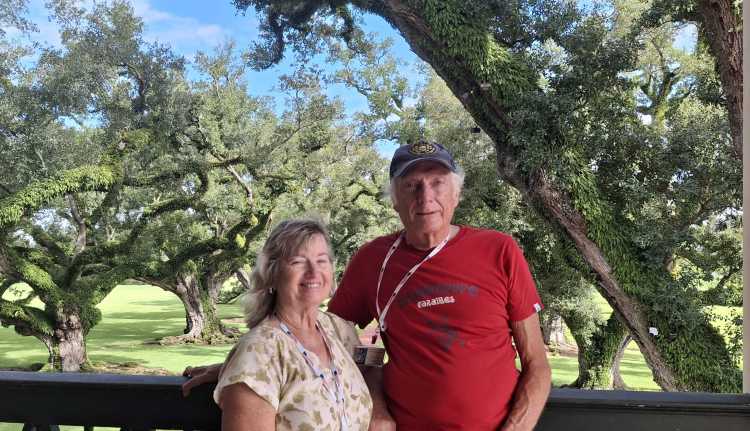
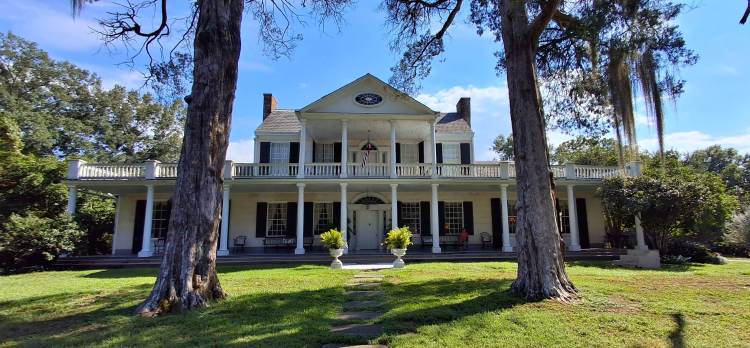
In Vacherie, LA, we motor coached to Oak Alley Plantation. The plantation house was completed in 1839 by Valcour Aime. He was known as the King of Sugar, one of the most wealthiest men in the South. Surprisingly sugar cane is still a major crop in the area. This, to me, was surprising since sugar cane and the wealth it generated has long been lost in the East Caribbean Islands. There are no rum distilleries here as all the sugar is sold to Domino Sugar Company. The plantation house has been restored although the alley of oak trees didn’t need restoration, as nature and time have been kind to them.
Bulk loading on the River
At night, the American Melody, proceeds up the busy river. Busy indeed! Ocean going cargo ships ply the river up to Baton Rouge. Tow boats push dozens of barges lashed together, loaded with sugar, soybeans, coal and a multitude of other products up and down river. Sometimes the Melody would pull to the side or wait to transit a bend in the river to let the long barges pass through first.
For two nights after dinner, the GiGi’s – two young female singers – entertained us with hits of the 1950-60’s. The audience danced (well some did) while the singers commented that they miss those days when you could actually understand the words to the songs. Odd I thought, as I don’t think they were born yet. Maybe their mothers sang to them in the womb.
Baton Rouge Capital Building
Going in Glass
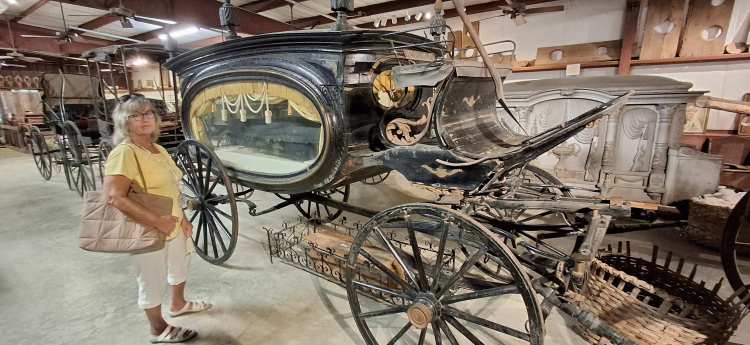
The next morning we arrived in the Red Stick city – Baton Rouge, LA – to again walk up and over the levee to see a city built on a low bluff along the river. The motor coach took us to the Rural Life Museum, a Louisiana State University (LSU) project. This extensive indoor/outdoor campus showed the “the way of life of our ancestors, [18-19th century] their hardships, toils, visions, inspiration, and determination by preserving…architecture and artifacts from our rural past.” I wondered if tourism was one of their visions. I am sure air-conditioning must have been on their minds. Also noteworthy, the state capital building is the tallest state capital building in the country. It looked like Elon Musk’s Spaceship to Mars.
Steve the Piano Man
At night after undocking, our resident professional entertainer, Steve Merritt, played piano during the cocktail hour and a few nights after dinner. He sat with us for dinner one night and we heard his life story of spending 11 years working on a bicycle piano at Disneyland, Japan. (It was a piano mounted on a tricycle which he played riding around the park). He worked another 11 years for them in California and on their cruise ships. Does this explain why he seemed a little daffy? The pandemic hit the cruise ships hard but he eventually returned to “sea” on the American Cruise Lines river boats. He was entertaining, if a little long winded, but had great background stories about the songs and music he performed. Mostly true, I assume.
Natchez Landing
The next morning, I thought the Melody was out of control. It was aiming for the muddy shoreline perpendicular to the River’s flow. Was Steve at the wheel? Surely the abandon ship signal will soon sound as we crash into the levee dead ahead. But no, we were just approaching the Natchez, MS landing where you pull up to the river’s bank to let passengers on or off. The boat noses in, firmly planning the bow in the mud, or concrete apron, and passengers walk a long gangway off the boat. In our case, the bow opens like a landing craft and projects the gangway over the mud. All is well, but we still had to climb up and over the levee to get to town.
On the bluff at Natchez
A tour of Antebellum homes, Dunleith and Linden was taken, along with Mint Juleps. All very Southern. These restored homes have electric lights and air conditioning but the furniture was old, no closet space, and there is no TV. In 1861 the demise of low-cost labor took a toll on the economy and their owners lost fortunes. Many of these homes today survive on the good grace of visitors and the income they provide. The owners live elsewhere. Mark Twain slept here a few times although not in those houses. I guess he just wasn’t that discriminating.
A visit to the boat’s bridge, to talk to the Captain and mate about boat operations was instructive. Don’t expect to see a big 6-foot-high steering wheel. Only a few paddle controllers for the rudders, bow thruster and engine controls. There is only one unlicensed engineer aboard, apparently there to keep visitors away from any moving parts. Radar, sonar, AIS, VHF are the main navigation tools. The whistle was never used, and there were no leadmen on the bow or quarters. The calling out of mark twain (2 fathoms) by the leadmen was the controlling depth from here on up. The captain had the required pilot license to navigate below Baton Rouge.
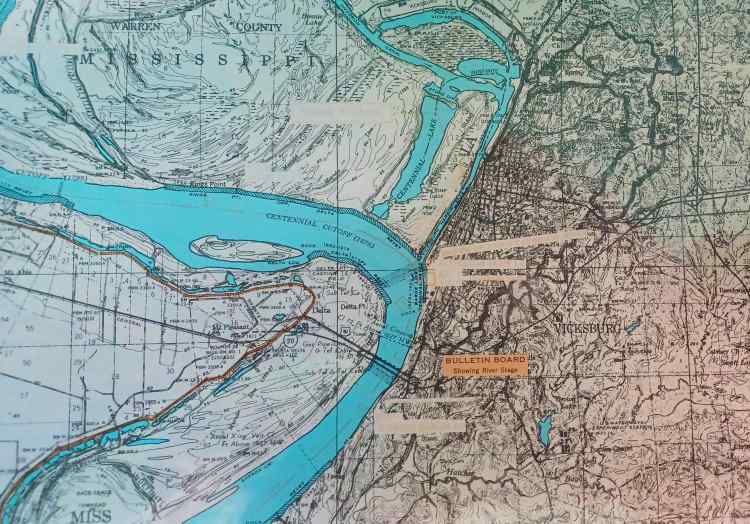
Vicksburg, MS is the site of the Civil War battle that determined the control of the River at that time. The city itself is built on a tall bluff so that after you climb up the levee to get off the boat, you still had to climb up to the city. Oddly enough, Vicksburg is no longer on the Mississippi River. It was founded and settled along it but the River had other plans and moved over and let the Yazoo River take its place. I guess it just gave up trying to flood the place. This was not unusual. The River has a tendency to meander and form new channels, ox-bow lakes, chutes, crossings, islands and scrolls. “He just keeps rolling along” so the song goes but the U.S. Army Corp of Engineers tries to keep it in line, and within it’s banks. The demarcation line between states like Louisiana, Mississippi, Arkansas is the middle of the River. However, when the river decided to move over, the line didn’t move and so parts of the states lay on both sides on the river. It seems man is the only one who recognizes these artificial lines while nature just keeps moving on. The massive 1927 flood really pushed the ACE to temper the River. Floods of 2011 were also damaging but somewhat mitigated by that time.
Vicksburg Landing
USS Cairo
The Vicksburg National Military Park commemorates both sides of the bloody war between the states. It has monuments and markers of where each state’s militia stood their ground with far too many never leaving the grounds. A salvaged and restored iron-clad boat from the River is ashore, the Union’s gunboat USS Cairo. It was sunk by the Confederate torpedo (mine). The iron clad sloping sides resemble today’s sloping side radar reflective war ships.
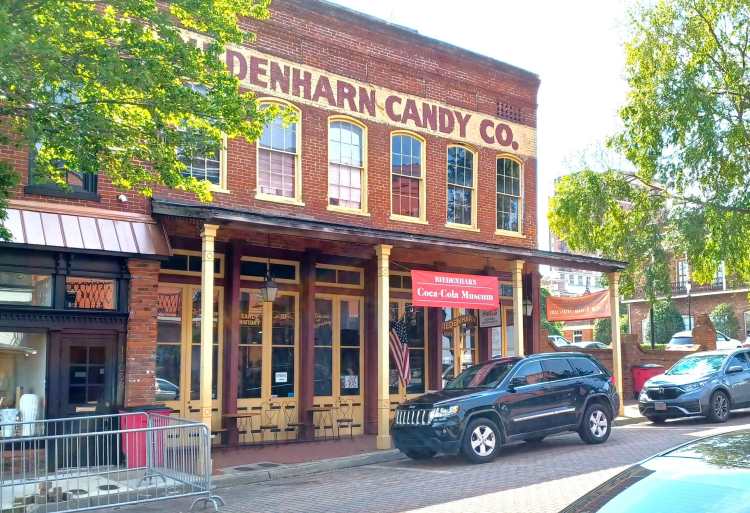
On Washington St., in Vicksburg, there is the Coco-Cola Museum where it was first bottled. You can get a cold bottle of this stuff that is made with the original formula using cane sugar. It is imported from Mexico! Locally grown sugar cane is replaced by corn syrup for us Americans. We sure do love our corn.
The run from Vicksburg to Memphis TN gave us a full day “at sea”. The River presented a more natural environment than the river down toward the Gulf. There were still long barges and tows but no ocean going vessels.
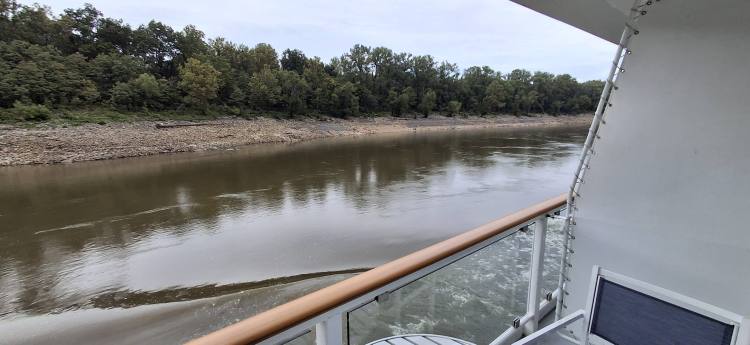
Those ships can’t go north of Baton Rouge. As I wrote, the River’s level was low, so the scrolls, sand bars and the ACOE’s mats to control the banks were all evident. The water itself certainly earns it’s reputation as being muddy. It dumps 1.3 million tons of mud into the Gulf of Mexico per day. But I’ll let Twain say a few words about the water.
“…if you let a pint of this yaller Mississippi water settle, you would have about a half to three- quarters of an inch of mud in the bottom, according to the stage of the river, and then it warn’t no better than Ohio water – what you wanted to do was to keep it stirred up – and when the river was low, keep mud on hand to put in and thicken the water up the way it ought to be.
The Child of Calamity said that was so; he said there was nutritiousness in the mud, and a man that drunk Mississippi water could grow corn in his stomach if he wanted to. He says: ‘You look at the graveyards; that tells the tale. Trees won’t grow worth shucks in a Cincinnati graveyard, but in a Sent Louis graveyard they grow upwards of eight hundred foot high. It’s all on account of the water the people drunk before they laid up. A Cincinnati corpse don’t richen a soil any.’”
Tunica
We arrived in Tunica, MS, just short of Memphis. The River didn’t have enough water in it to permit docking of the Melody there. No worries, we motor coached to Memphis and went straight to Graceland.
I am following the river
Down the highway
Through the cradle of the civil war
I’m going to Graceland
Graceland
In Memphis Tennessee
I’m going to Graceland
Paul Simon
Graceland
It’s not that we are Elvis groupies. But unlike the Gigi’s, we actually did hear Elvis when he was alive and understood the words. Graceland is the place to go if you ever wanted to see and learn anything about Elvis. If you are interested in his tax returns, costumes, awards, movies, concerts, contracts, kitchen, jet planes and cars, and his receipt for a pool installation, and yes, his grave next to the pool, Graceland is for you.
Lorraine Motel
Memphis was also the last stop for Martin Luther King, The Lorraine Motel, with an unchanged exterior, is now a National Civil Rights Museum. Progress has been made since then but it is sad to read about incidents like Tyre Nichols that occurs today.
The Rock ‘n’ Soul and Music Hall of Fame Museum is here, as is Beale St, and the second largest Bass Pro Shop – Outdoor World retail store housed in the massive Memphis Pyramid (inside: 600,000 gallons of water with over 1,800 fish; a cypress swamp with alligator pools and duck aviaries; a hotel; and a breathtaking observation deck at the top of the 32-story s/steel pyramid). Memphis is more than Graceland.
Cotton Fields
Our Mississippi river cruise was over. Definitely different than a cruise on Kalunamoo in the Caribbean but not totally different. The landscape was different, shoreside was different but the people and crew we met were all equally friendly and sociable. The Mighty Muddy Meandering Mauling Mellowing Masterful Mississippi River, the lower part which we cruised, was great to see and experience.
From the sugar cane fields in southern Louisiana, to the wide cotton fields of Tennessee, the River provides the backbone of our country that keeps flowing and which is still worth exploring. I’ll let Mark Twain have the last words about the River, although I might disagree:
“It is good for steamboating, and good to drink; but it is worthless for all other purposes, except baptizing” Life on the Mississippi, Mark Twain
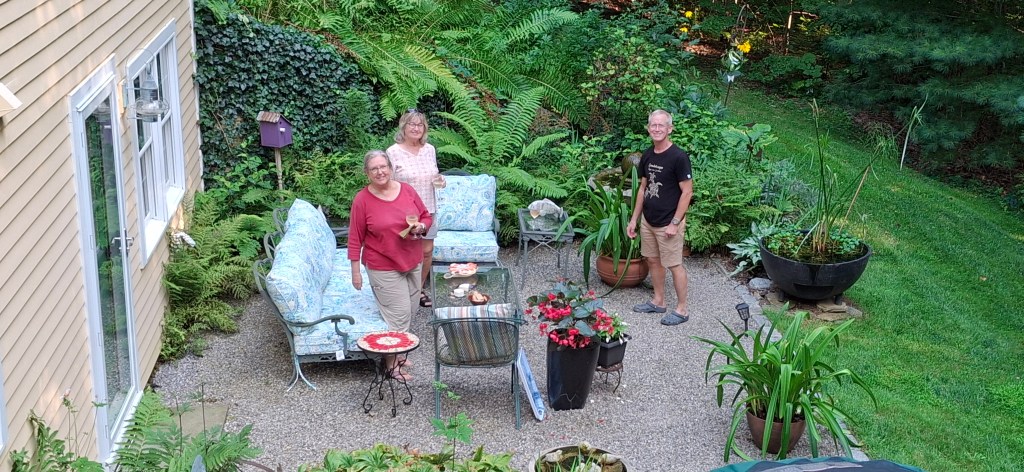
While Kalunamoo is undergoing some M&R in Trinidad, our Northeast Road trip took us to see family and friends. The first stop was at our daughter and son-in-law’s summer home in the Adirondacks. As a bonus, our two oldest grandsons and their girlfriends were also there. It is always fun to visit the mountains of New York State. As long as it is in the summer!
Their house is on a picturesque lake between Saranac Lake and Tupper Lake, deep in the heart of the Adirondack state park. We didn’t get to sail on the lake this time, but we have done it in the past. Their little Sunfish keeps our sailing ability tuned during the time we are away from the Big Boat. True, salt free and shark free water is something we need to get used to, but it is manageable. Favorable winds are always present, if a bit swirly off the surrounding hills, and not as consistent as the Trades. But besides sailing, the topic of wind was never far from our lips. Major hurricane Beryl passed directly over the small Grenadian island of Carriacou with devastating effects only a short time days before.
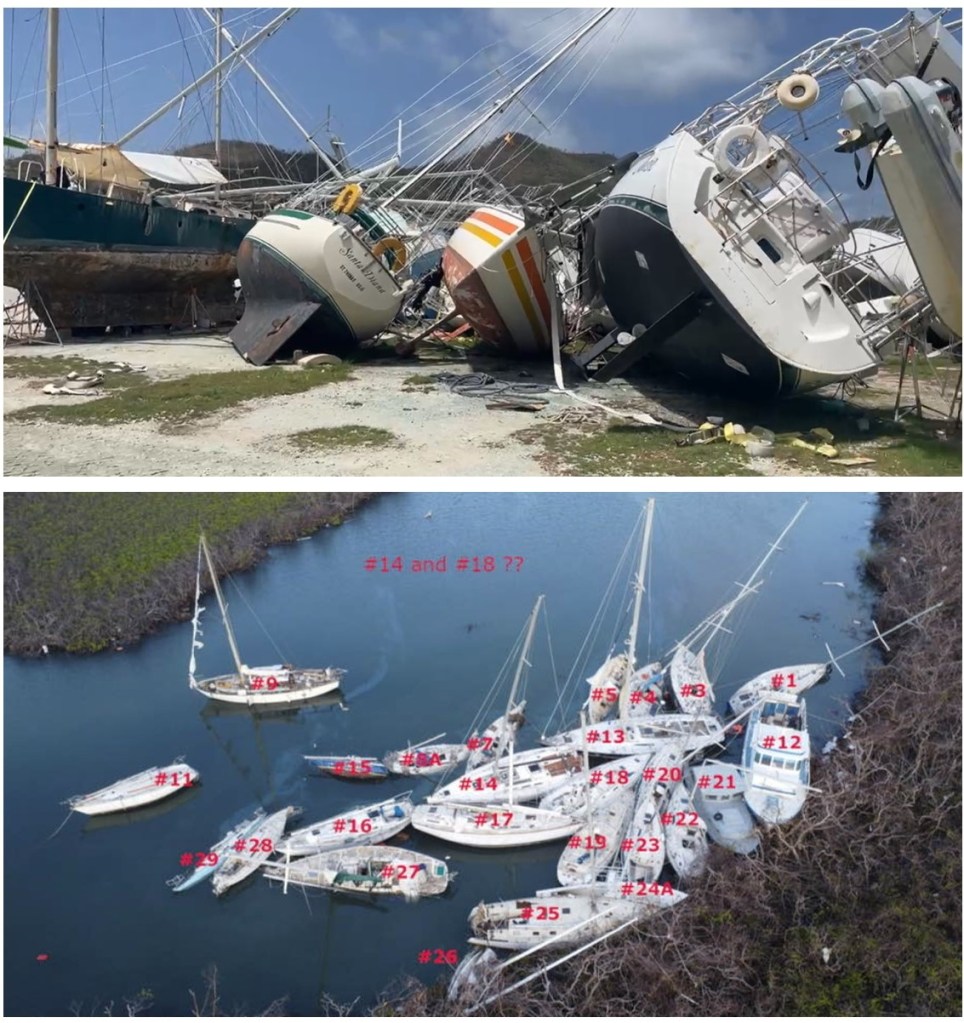
Carriacou was our last port of call before sailing to Trinidad in May. We have been there many times and would never think of being there in a hurricane, not to mention one with 120 knot winds. The small “hurricane hole” of their mangrove cove is not what I would consider safe. Boats hauled in both marinas in Tyrrel Bay, Carriacou were extensively damaged as seen in drone videos. But, considering that Beryl was a major category 4-5 hurricane, few places would survive a direct hit. Damage extended from Bequia, St Vincent in the north to Prickly Bay, Grenada in the south. This is the reason why we keep Kalunamoo in Trinidad during this time.
After our visit with Melanie and Dave, we headed to Massachusetts to see some CODs. Cruisers On Dirt – they either swallowed the hook and moved on from cruising or, like us, take a vacation from Paradise. We visited with Nada and Polda (ex-s/v Nada) at their home, Lee and Cheryl (ex-s/v Hippocampus who now have a trawler), Lee and Sharon (s/v Allegro), and Cathy and Larry (ex-s/v Katahin). It’s great catching up with cruisers we met years ago as cruisers usually form bonds and friendships that last many years. As usual, Nada served a delicious lunch that can’t be topped.
We then stayed two nights with Lee and Sharon in their recently purchased summer home away from Allegro. Just outside of Plymouth MA, it will keep Lee busy while Allegro summers in Trinidad.
Heading south we stayed a few nights with Bob and Brenda (s/v Pandora). Pandora is also in Trinidad, this season for some major work. While up here, Bob puts a lot of work into the gardening and bird feeding at their home. Brenda weaves and teaches weaving, while Bob is also the driving force behind the Salty Dawg Sailing Association (he is the president). He concedes that the association relies on many talented volunteers, but come on Bob, as president you have done a great job. Their plans of sailing to Europe next year will put a dent in his landscaping!
On our drive back to Long Island we elected to use the Cross Island Ferry from New London CT to Orient Point LI. It was good to get back on the water again! But this takes me back to the subject of the post: going with the wind.
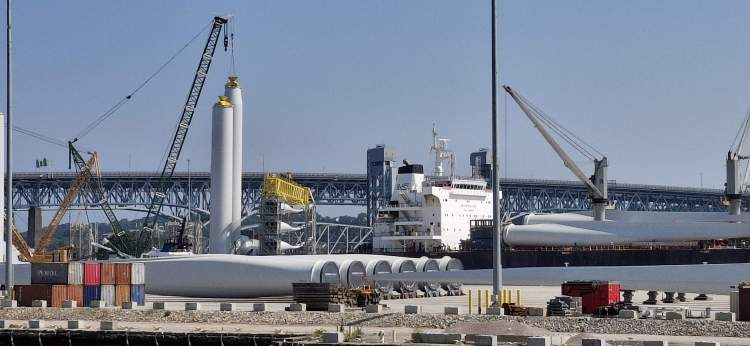
The ferry from New London is not a wind powered craft but just past the General Dynamics Electric Boat Yard facility (that makes nuclear powered subs), lies the staging area for a wind farm. The massive towers and blades of the wind generators are being loaded onto a ship which will transport them off-shore south of Long Island. These wind farms are sprouting up in many places ashore along with the solar farms that feed the local electric grids. Whatever you think about these renewable energy sources, cruisers and sailboat owners have been successfully harnessing this energy for some time. The New World would never have been “discovered” without sailing vessels! Fossil fuels may only be a blip in the long history of the world. As I said many times, the stone age didn’t end because they ran out of stones – something better came along.
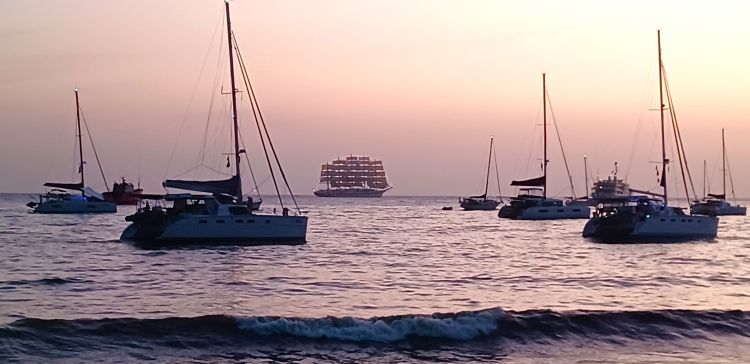
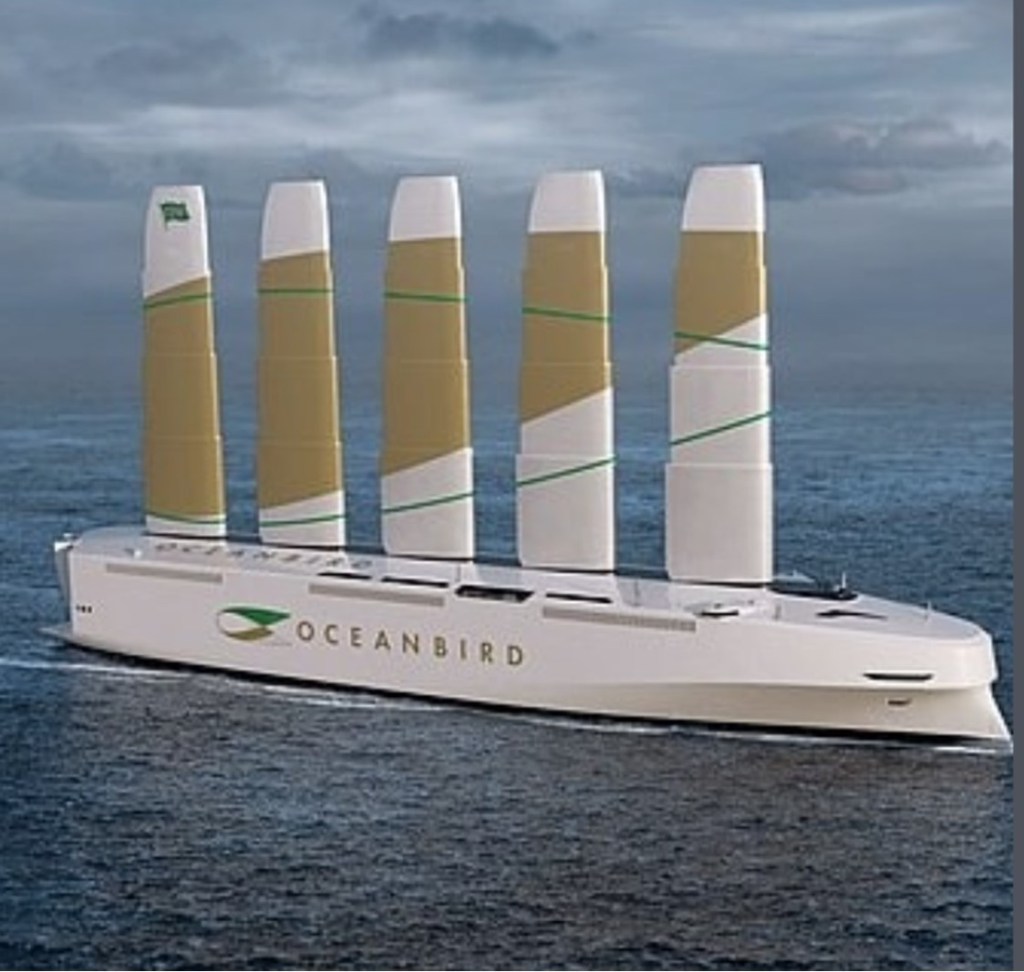
Other wind powered crafts abound. From old clipper style cruise ships to modern luxury mega yachts to the future of sailing cargo ships. The answers may be blowing in the wind but going with the wind seems like a direction many will follow. Now if we only could harness a hurricane’s energy!
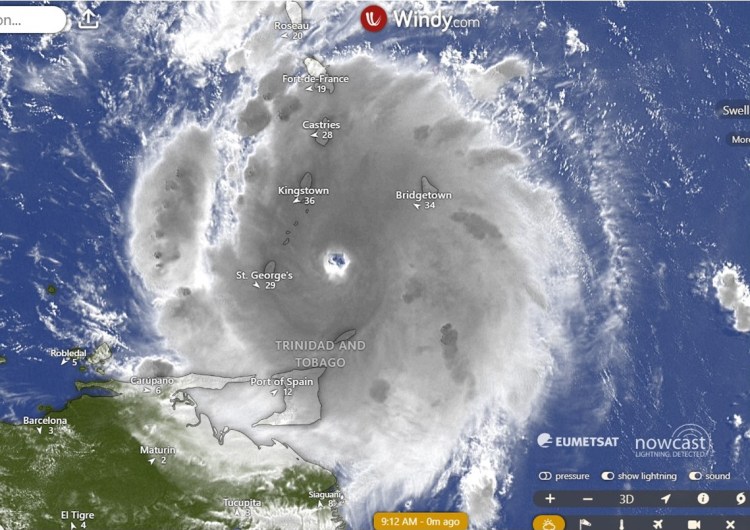
Kalunamoo is on the hard in Trinidad getting some relatively minor work done. Hurricane Beryl is about 110 nautical miles north of Trinidad, crossing Carriacou heading west. We are “on the beach” on Long Island, NY.
During the hurricane season all eyes in the Caribbean look east for approaching storms. Cruisers make plans to haul out their boats, head north or south out of the “hurricane belt” or prepare a quick exit out of the path of an approaching storm. We have elected, other then during the two pandemic years, to keep the boat on the hard in Trinidad. Trinidad is just outside of the belt as 99+% of these storms pass north of the island even when they are in the area. Unfortunately, the Lesser Antilles islands themselves can’t move out of the way of these storms where wind, seas and heavy rains can do major damage. Fortunately, only a few (on average 2.5 per year) storms actually affect those islands. This is understandable as the other “area” encompasses a far larger area: the entire western Caribbean, Cuba, the entire Gulf of Mexico, Florida, the East Coast of the U.S. and Bermuda. Cape Hatteras NC, still remains the number one point that receives more storms than any other point in the entire basin.
Most cruisers who take their boat to Trinidad also take the opportunity to do boat stuff from simple M&R tasks to total refit. With little worries about tropical storms and hurricanes they take advantage of the experienced workers providing good value to their M&R budget. Kalunamoo is having some inside and outside woodwork refinished, some new aft deck cushions, fabricated and some other minor work done this year. We will probably replace the anchor chain while there also.
In the meantime we came back to New York early this year to address some medical issues. They should be completed without any lingering concerns and we should be back on board and “fit for duty” come September.
Robert Moses Beach on Fire Island NY
Of course, being “on the beach” here in the Northeast is a change of venue from liveaboard cruising in the Caribbean. The “local” beach is ocean beach on Fire Island but the water temperature is still too cool (upper 60’s) compared to what we are use to. But being here allows us to see family and friends “live and in person” rather than via video calls, share meals, or watch the grandkids play ball. Our range of mobility is greatly extended. While on board we use our dinghy to go a few miles while here a car can travel miles and miles to shopping restaurants and family and friends. At times, however, I think the dinghy may be faster than the traffic on the Belt Parkway in Brooklyn.
Bill on s/v Endeavour
Still, we are never far from the sea or the beach here but we will be traveling up to the Adirondacks, New England, and down south before the summer is over. Sailing on “other people’s boats” is not out of the question either. A cruise on a Mississippi River Boat is planned before we head back on board Kalunamoo in Trinidad. Hopefully we will avoid any hurricane while we are here but wherever they are we hope everyone stays safe.
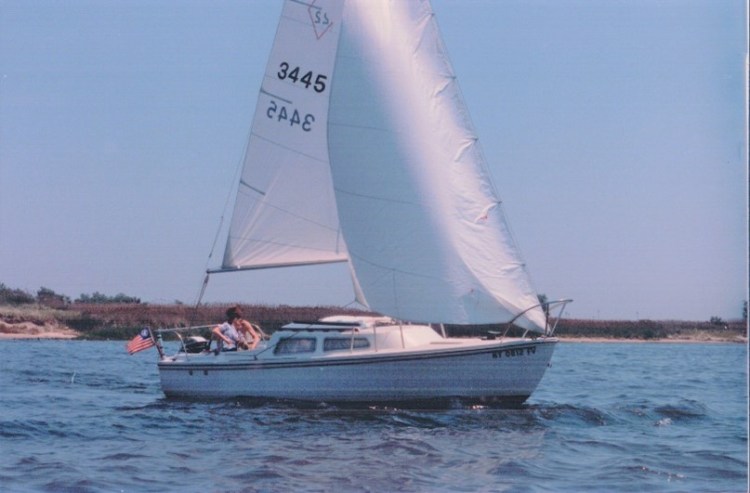
We have been full time liveaboard cruisers for the last 13 years. For the last 42 years we have owned and sailed sailboats. Ever since that cold April day 42 years ago when Maureen first fell overboard docking our 22’ Catalina, the pitfalls of sailing – demasting, boom breakage, engine failures, adverse weather, cuts and bruises, unexpected expenses, and disappointments – have been part and parcel of owning and using a boat in salt water. As our cruising friend Mark once said, “everything on the boat is broken, you just don’t know it yet”.
But I don’t want to harp on the negative aspects of sailing because they don’t outweigh the positive aspects. Some may debate that, but that is how we feel. But what I do want to reflect and comment on is the social sailing structure that has revealed itself over the years and what may keep cruisers on the sea. Anyone who has ever stepped aboard a boat can sense the difference between land and water. Beyond the obvious – some people actually get sick the moment they step aboard a boat not aground – the whole experience for many is life-changing.
Sailing, of course, has a long and storied history. Traditions, exploits, adventures and myths have always been part of the lure of the sea. However, the history of recreational pleasure cruising has not been as long. Maybe Cleopatra cruised the Nile for pleasure but I’m not sure of that. Long distance sailing was spawned by the commercial merchant trade. Little, if any, note was given to those who crossed oceans for fun. Mutinies were more noteworthy than celebratory recreational events. Sea shanties seemed to emphasis the hardships rather than the joys of seafaring.
But things started changing in the 1800’s. Dismal life ashore may have driven some to seek better lifestyles or adventures on the sea. Many books have been written reflecting how innocent landlubbers were drawn to the sea and to a different way of life. I’m thinking of “Two Years Before the Mast” (s/v PILGRAM) by Richard Dana or “Typee” by Herman Melville (s/v DOLLY). The former is about life aboard an early maritime merchant trader and the latter aboard a whaler. Both, based on the author’s personal participation, gave accounts of being drawn to life sailing the oceans of the world (and the harsh reality that ensued). Of course, pirates held the public’s attention and naval warfare heroes were popular but those are different stories. Throw in competition races like the America’s Cup and the world of recreational sailing the ocean became a draw for many.
Joshua Slocum (s/v SPRAY) certainly can be credited with demonstrating that a cruising liveaboard lifestyle need not be a commercial enterprise. I’m sure there were other pioneers down through the years all the way to Lynn and Larry Pardey (s/v SERAFFYN), Don Street (s/v IOLAIRE) and many others. Today, video blogs proliferate (s/v LA VAGABON, DELOS…) that continue to promote a lifestyle that Joshua and others could only dream about. I’m thinking of Melville sailing on a catamaran off Spain, writing the next great sailing story and being attacked by Orcas while video blogging to his grandkids. Of course, gone are the days of hardtack, salted fish, octants, signal flags, and baggywrinkle. All replaced by onboard baked artisanal pizza, refrigerated fresh salmon, GPS, Starlink and dyneema.
But what of the sailors and their lifestyle? Before the advent of recreational sailing and excluding explorers, there was a hierarchy of sailors (and pirates). At the top of the list were sailors the likes of which Mark Twain wrote about aboard the s/v BAY OF BENGAL. The sailors of these fast and mighty clipper ships sailed halfway around the world and were at the pinnacle of admiration. Lower down the list one would find the smaller packets, the costal schooners, the Gloucester fisherman off the Grand Banks, the local scows and barges. According to Dana, the least desirable vessel to sail on was a whaler. It attracted only those who couldn’t, for various reasons, gain employment elsewhere and were not in jail.
With all the above in mind, where do today’s recreational cruisers fit in? Where do we (s/v KALUNAMOO) fit in? Putting aside the commercial maritime industry (Merchant Marine), racing and mega yacht boating, the social circle of cruisers is stratified. This is the arena we have lived in for 13 years and some of its inhabitants that we have come to know. Let me first say that the community is 95% sail boats. Not that we have anything against powerboats, but the fact of the matter is, offshore cruising does not lend itself easily to small (less than 80’) powerboats.
Within this community, there is a diversity of personal backgrounds but we noticed a preponderance of people who are less risk adverse than the people we know ashore. These can be entrepreneurs, ex-military, self-employed, or others with a definitely “independent” outlook on life. This is not surprising but does color the community in different ways. The experiences they had while cruising are as endless as their stores.
Beyond that, there is also, what might be called a “commitment level plan” to the sailing lifestyle. There is no “right, proper or derogatory” plan and the levels range widely. The majority that we have encountered are either full-time cruising liveaboards with no land base or part time cruisers with a land base or home. And they tend to be very social minded – i.e. frequent sundowners, offers to help, and generally very friendly. Their “long term” commitment plan may be as short as a year or two or as long as 10 years or more. In other words, it is not a “forever” plan. This leads to cruisers we have met that drift in and out of our lives but remain friends regardless of where we or they are.
A minority of others are split into those who have no intention of living ashore at any time (own no shoes) or those who plan to move on to other adventures after a relatively short time aboard (did that, done that). They too share the social aspect of cruising. Of these, at present, we fit into the no shoes plan. Of course, health, wealth and age (HWA) play an important part with all of these plans.
The cruising (migration?) range for all cruisers vary from a few hundred miles to multiple earth circumnavigated voyages, proving the earth is round…and big…with many, many places to see.
An underlying theme in all of this, from Cleopatra (maybe) to those who jump aboard their first boat – a 55’ cat? – is the Sense of Freedom! The Song and Lure of the Sea. But I wonder about that which brings me to the title of this blog, Slave of the Sea (sorry it took so long!).
Was the song we heard actually mermaids luring us to shoals of despair. I’m here to warn you as many succumbed to its seductive power of promised bliss. Are cruising sailors really that footloose and fancy free or are we slaves of the sea?
Have we fallen victim to the Stockholm Syndrome of sailing? Tales of heroic re-fits and battles of epic seas earn medals of honor while endless hours at the helm garner admiration for fortitude and perseverance. The truth is that a sailor’s sense of freedom is a figment of our imagination while a hidden master dictates the course that we will follow, the repairs that we make and the bilges we pump. We are captivated by the sea’s demands and ultimately identify closely with our captor. We enjoy this role of slavery and its ceaseless challenges. We relish the zig zagging life of voyages that were and those to be. Make no mistake, we are Slaves of the Sea wedded to the capricious whims of wind and wave but rejoice and enjoy the rapture of its daily embrace. We may be Slaves of the Sea but have avoided being ground into the dryness of the land.
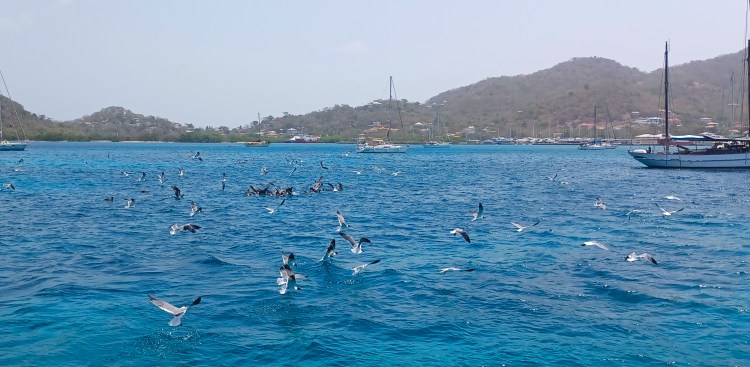
The last post was about something different. This one is about something completely different. We are back in Trinidad where Kalunamoo spends the summer out of the paths of any hurricanes. After we sailed from Bequia, we anchored in Tyrell Bay, Carriacou with the plan of going to the main island of Grenada. But as often happens, we spent a few more days at the anchorage and before we knew it our plans changed and we decided to sail directly to Trinidad from Carriacou. Most of the time in Carriacou was spent watching the sea birds feast around the boat. I could also mention that the sailing angle is better, the timing was great, and the weather was more cooperative from Carriacou, all of which was true, but in reality, we decided to save a re-visit to Grenada for another time.
The 112-mile sail from Carriacou was fast. Actually, too fast as we had to slow down in order to arrive after sunrise. With only the main and stay sail, we entered the Bocas, the cut between mainland Trinidad and Monos Island, just after sunrise. Not that it is difficult to enter in the dark, but it is more expensive. Expensive? Yes, because when you check into immigration and Customs and they ask what time you arrive, and if it was before 8AM, they will charge overtime. This is true even if you don’t go to Customs and Immigration to check in until after 8AM.
But there is no checking of actual arrival time – it’s the honor system. We are honest, mostly.
But as fate (actually the Trinidad and Tobago Coast Guard) would have it we could not lie. This was because we were “welcomed” into Trinidad with an honorary boarding by the TTCG while transiting the Boca De Monos. The boarding party, complete with AK 47’s and military camouflage, was very respectful as they searched Kalunamoo for stowaways, contraband and what not. Actually, we were not really offended. Knowing they have a job to do which eventually protects cruisers, we felt honored. How can one then lie to Immigration authorities about an arrival time. The over time cost 200 Trinidad Dollars ($29.00 USD), is the penalty for arriving early?
Perhaps, its Kalunamoo’s pirate ship design (by William Garden) that attracts so much official attention like this. In any case it is almost routine. We were last boarded like this in St Martin. We were also boarded in Ft. Pierce Florida. A small price to pay to keep us honest, mostly.
We did eventually go to Immigration and Customs, fill out multiple forms with carbon paper between them and officially entered Trinidad and Tobago officially. Actually, if you go to Tobago (which is the same country) there are more forms to fill out also.
,
After two days at a mooring, in Chaguaramas, we were hauled and put on the hard in the Power Boats yard. That ended voyage #14. Trinidad to Trinidad covering 868 miles and 13 ports. It seems like we were just here. It was actually only 6 months ago. Seeing cruisers we know, sundowners on the dock, pot luck BBQ’s, Wheel House dinners, evening pigeon flyovers, doubles and jam sessions are all part of the Trinidad scene. As far as Kalunamoo: Insurance inspection of the boat, some minor repairs and maintenance will be the order of the summer.
But what Iwrote above is not the subject of this post: Something Completely Different. The following is.
We came in early this year as doctors await my return to New York to continue their insistence, and my concurrence, to remove a kidney stone. It is one of those things that can really disrupt a good night’s sleep. And, after all, what is medical insurance for if you don’t take advantage of it. So, we will be off the boat until mid-September, and doing somethings completely different.
Family and friends will be visited. The grandkids will be reintroduced to their grandparents. The sun will be setting around the time we usually head to bed. The cold of summer air conditioning will require heavy clothing in restaurants and theaters. The daily ritual of starting the electric generator, checking the anticipated weather, making sure we haven’t dragged onto shoals and reefs, the choice of beaches to swim at or the need to make it a day of provisioning will be suspended until our return onboard. Long overnight passages, or decisions to reef or not, or moving to a less rolly anchorage will not have to be faced. This is all tolerable while away from Kalunamoo and is the “cost of doing business” when ashore.
In the end we will have a good time. We even have planned a river cruise on the Mississippi so we won’t forget what being afloat is like. I’m wondering if while driving our rental car we’ll experience what seems like routine on Kalunamoo. Will we be stopped by road authorities and searched for stowaways, contraband or what not? If so, we’ll feel at home.
In 1979, the British colony of St Vincent became an independent country. It was the last Lesser Antilles islands to gain independence. The French still own St. Martin (French side), Guadeloupe and Martinique but call them departments not colonies. One of the first things St. Vincent had to do was name their country and formally named it St. Vincent and the Grenadines. Sir James Mitchell, the very influential and popular politician, born in Bequia, insisted that the Grenadines be specifically named to ensure their continued uniqueness in the eyes of the public. The country’s flag was redesigned with a stylistic V in lieu of a pineapple representing the Grenadines to the south of the mainland.
Early attempts to form a federation with the other newly independent Lesser Antilles failed, so each remain independent although they did eventually form the 15 country CARICOM association.
Friendship Bay
I write this because the Grenadines do have a uniqueness that is most appealing to anyone who values distinctiveness. Admittedly, the distinctiveness is not earth-shattering, as they are certainly Caribbean Islands with a history akin to the rest of the Caribbean: home to the Amerindians but supplanted forcefully by western explorers, exploited by resource extraction, infused with African slave labor, tried a non-competitive agricultural economy, and ended as tourist destination with a fragile ecology. Like all these islands they are trying to diversify their economy beyond tourism but that is a long road.
Most of the distinctiveness of these islands is their small postage stamp size. They are smaller than the small “Lesser Antilles” they are part of. Being so small, they lack the developments that the larger islands can offer or support. Tourism is, of course, now the major source of income for all islands, and so it is a mixed blessing to be so small. Unique yes, but large resorts or marinas are out of the question and so visitors find limited facilities here.
Moonhole
Moonhole was an experiment of epic rustic tourism in the 60’s. Whaling is still legally allowed (4 whales per year). The crafts of model boat building, carving and live music are prolific. Years ago, Bob Dylan had his wooden sloop Water Pearl built here. But there are plenty of places to chill and lime, attend happy hours, and day passes to former plantation hotels with pools. All this was both by design (ex-Prime Minister Mitchell fought against large resorts precisely because he didn’t want to duplicate what other Caribbean Islands offer) and by geography (small islands!). The downside is the limited source of income. The conflict is eternal as the world population grows: people seek quality of life improvements which usually mean tradeoffs between more development and the status quo. In other words, if we want to keep things exactly the way they are, everything must change.
So, the Grenadines, Bequia being the northern most, have developed slowly and that gives it an appeal unlike most other East Caribbean Islands. Certainly, other parts of the world hold similar islands and face similar economic decisions. The Maldives comes to mind. These places attract cruisers and visitors alike and one can always find them on their travels. It’s that fact that fuels the cruising community’s roaming quest. However, the enduing paradox remains. Places relying on their uniqueness seldom remain unique.
This is not to say there is nothing to do here in Bequia or the other Grenadine islands. Despite my last blog, The Ability to be Bored, there is enough here to keep most cruisers from being bored. We happened to be here when the Salty Dawg Sailing Association scheduled a rendezvous over the Easter Holiday. As “old members” we were asked to help host the rendezvous and with the help of Barbara and Ted on RAVEN we did.
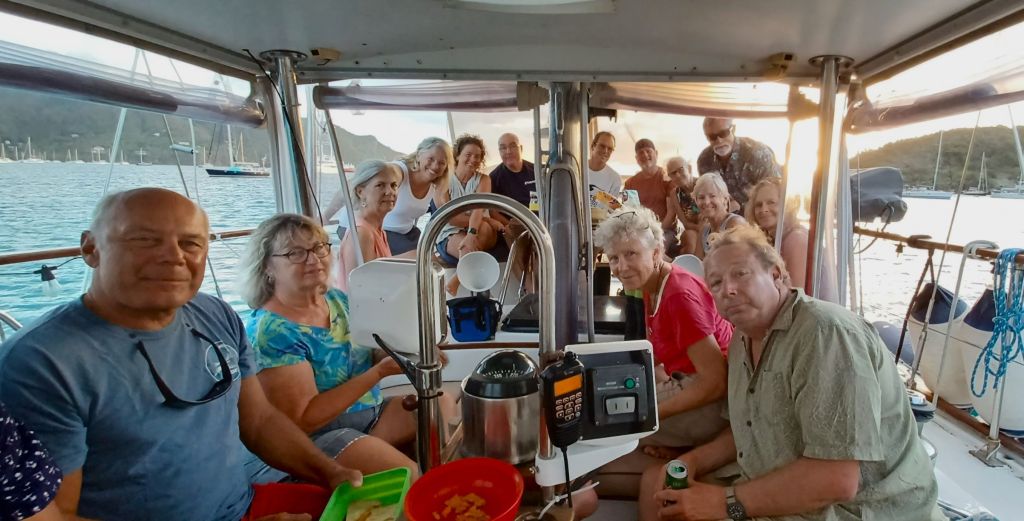
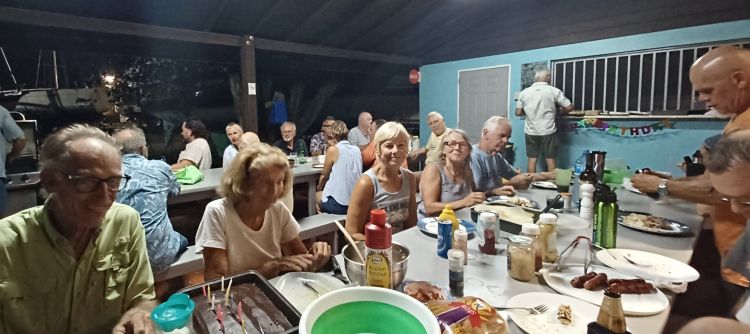
We gathered the boats that arrived (KALUNAMOO, RAVEN, SEA PEARL, MOMENTUM 42, GLITTRA, ADIONA, LOGOS, and RALLY POINT) as some were heading north and some heading south. The local Bequia Easter Regatta was again cancelled this year (they report that they are reorganizing for 2025) but there were activities held for the locals which included a triathlon, Gospel Concert, Coconut and Gumboat races, Egg Hunt, and Easter Sunday Family Day at the beach. Meanwhile we held sundowners, cocktail gatherings, dinghy drift, snorkel trips, scuba dives, hikes, jam session, tours and lunches. The weather was beautiful, the water very warm, and we enjoyed all the “company”. Cruisers we know are heading here so we will stay around awhile to meet them but eventually we’ll head south.
The Salty Dawgs at the Firefly in Bequia
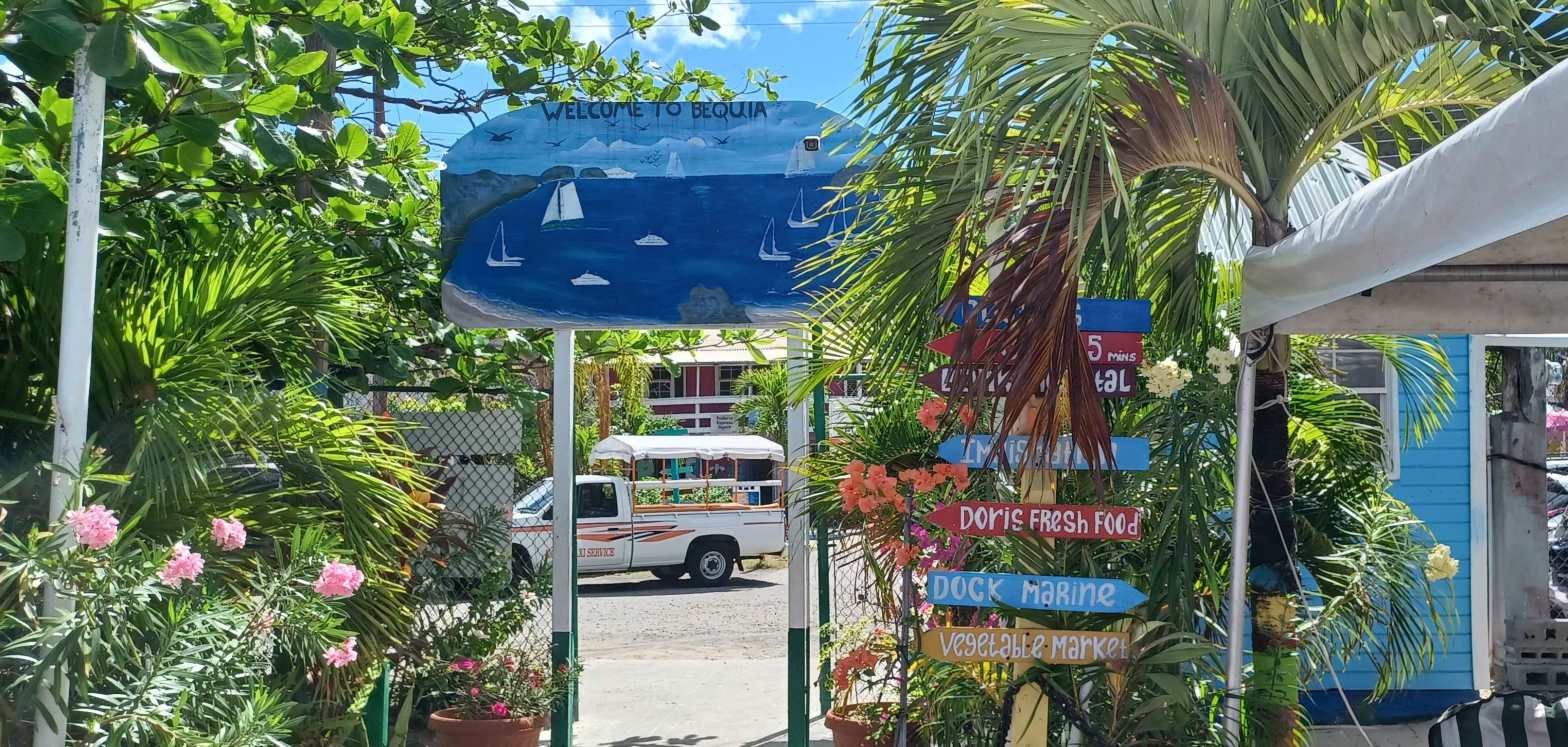
Our next jump will be down to Carriacou. That island is also in the Grenadines but is part of Grenada and definitely you get the feeling you are back in a usual Eastern Caribbean island. After spending a few days there, it will be off to Grenada itself. We haven’t been on that island in six years. We will be in Trinidad by May 1, to start our “summer routine”. In the meantime, Bequia, the different island, holds our interest in its distinctiveness.









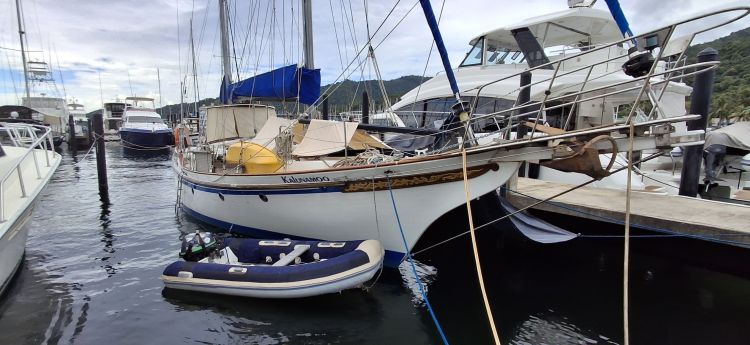


































 Kalunamoo